Food & Water Storage: Complete Emergency Preparedness Hub
Food and water are the foundation of every emergency preparedness plan. FEMA recommends a minimum of 72 hours of ready supplies: but realistic emergencies often last significantly longer. These guides cover everything from your first emergency food purchase to a full 1-year stockpile, with honest product reviews and practical storage advice.
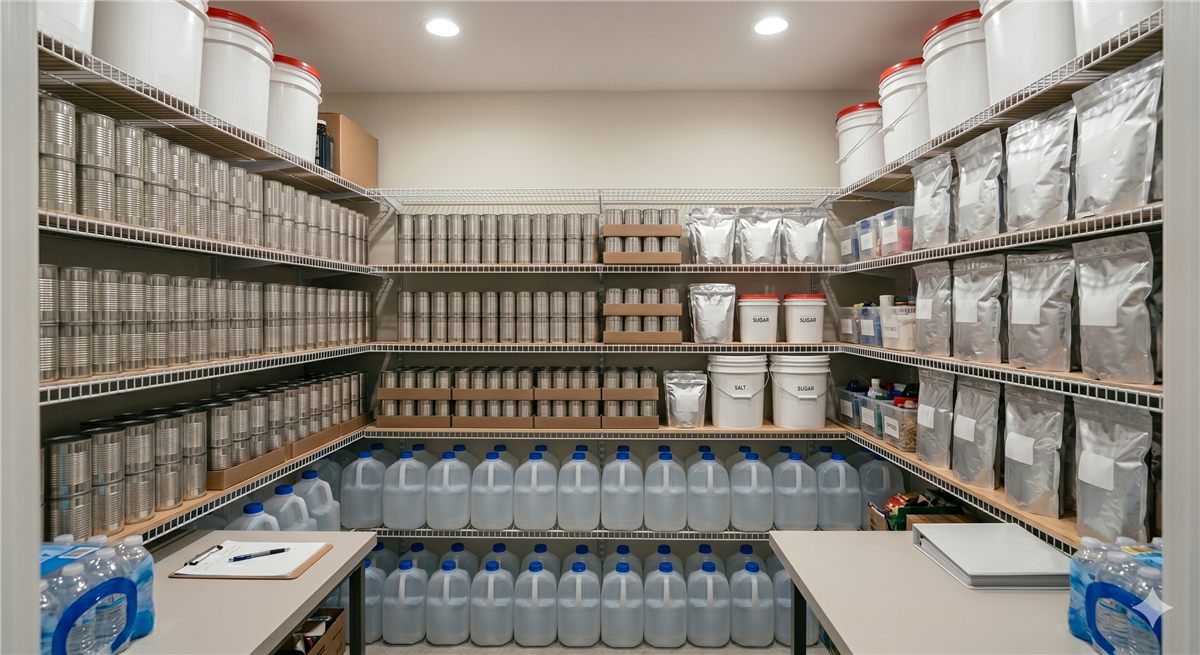
Every guide is aligned with USDA, FEMA, and Red Cross food safety guidelines. All product recommendations include direct Amazon links and honest pros and cons.
Water Comes First, Then Food
Water Is the More Urgent Priority
The human body can survive weeks without food but only a few days without water, which is why water storage and purification should be the first thing a new household addresses, not an afterthought behind food. Ready.gov's standard guidance is one gallon per person per day, covering both drinking and basic sanitation, with at least a 3-day supply as a baseline and more for longer planning horizons. If you can only afford to prioritize one category this month, make it water.
Calories Matter More Than "Days" Labels on Food Kits
A bucket marketed as a "30-day supply" doesn't always deliver 30 real days at a healthy 2,000 calorie/day baseline; some kits average well under that per serving once you do the actual math. Check total calories and divide by 2,000 to get real days of coverage, rather than trusting the marketing name on the package, a trap several of the guides below walk through in detail.
Rotation Keeps a Stockpile Usable, Not Just Purchased
Buying food and water is only half the job; a stockpile that sits untouched for years without any rotation plan will have expired items mixed in with good ones by the time you actually need it. Build a simple "oldest first" habit into normal grocery use where possible, and keep a written log of purchase and expiration dates for anything stored long-term, so you're not discovering spoiled food during an actual emergency.
Best Product Picks
Dedicated buying guides with specific picks, pros, cons, and real pricing for each category, not a generic one-size-fits-all recommendation.
- TOP PICK Best Emergency Food Supply Kits 2026: Honest Reviews
- Best Freeze-Dried Survival Food: Brands Compared & Reviewed
- Best Water Filters for Survival: LifeStraw vs Sawyer vs Berkey
- LifeStraw vs Sawyer Squeeze: Which Water Filter Wins?
- Best Water Purification Tablets: Complete Buyer's Guide
- Best MRE Meals to Buy: Military Rations for Preppers
- Best Off-Grid Cooking Stoves for Emergencies
- NEW Best Manual Can Openers for Emergency Food Supplies
- NEW Best Food Storage Buckets for Long-Term Supplies
Top Picks
A starting point from across the category:
Mountain House Classic Bucket (29 Servings)
The highest-rated taste among freeze-dried brands, with a 30-year shelf life. See our emergency food supply comparison for budget and long-duration alternatives.
Check Price on Amazon ↗Sawyer Products SP131 Squeeze Water Filter
100,000-gallon capacity in a 3 oz package. See our water filter comparison for home-base and group-filtration alternatives.
Check Price on Amazon ↗Reliance Aqua-Tainer 7-Gallon Water Container
Space-efficient rigid storage for building your water reserve. See our water storage container comparison for stackable and collapsible alternatives.
Check Price on Amazon ↗Food Storage Guides
Beyond individual product picks, these cover the planning side: how much to store, how to keep it safe to eat, and special dietary considerations. This is where most of the actual planning work happens, since buying food is simple but building a stockpile that stays genuinely usable (safely stored, rotated, suited to any dietary restrictions in your household) takes more thought.
- 3-Month Food Stockpile Plan: Exactly What to Buy & Store
- Non-Perishable Food Stockpile List: 50 Best Foods to Store
- Emergency Food Rotation Guide: Don't Let Your Stockpile Expire
- Mylar Bags & Oxygen Absorbers: Food Storage Guide
- Pandemic Food Stockpile: What to Buy Before the Next Outbreak
- Emergency Food for Diabetics: Safe Stockpile Guide
Water Storage & Purification
Storage covers water you already have; purification covers turning questionable water from a natural or disrupted source back into something safe to drink. Most households need both: stored water for the first several days of an emergency, and a filtration or purification method for when that stored supply runs low and you need to rely on tap, well, or natural sources that might not be safe untreated. Neither one alone covers every realistic scenario.
- Emergency Water Storage Guide: How Much & What Containers
- NEW Best Water Storage Containers for Small Spaces
- Water Supply Disruption Guide: What to Do When the Taps Go Off
Food & Water Storage FAQ
How much water should I actually store?
One gallon per person per day, covering drinking and basic sanitation, with at least a 3-day supply as a baseline. See our water storage guide for how that scales for longer durations and different household sizes.
Why doesn't a "30-day food supply" always last 30 days?
Many kits are sized by serving count rather than actual daily calories, and some servings average well under the 2,000 cal/day baseline one adult needs. Check total calories divided by 2,000 to get real days of coverage before trusting the product name.
Do I need a water filter if I already store water?
Yes, as a complement, not a replacement. Stored water runs out eventually; a filter lets you safely use natural or municipal water sources once your stored supply is depleted. See our water filter comparison for picks across use cases.
What's the easiest first purchase if I'm starting from zero?
A case of bottled water and a basic 72-hour emergency food kit cover the most urgent gap for the lowest cost and effort. See our emergency food supply guide for a specific starter pick, then build toward longer-duration storage from there.
Not sure where to start?
Start with our Beginner's Guide to Emergency Preparedness: a step-by-step roadmap that takes you from zero to prepared in under 30 days, for under $100.
Start Here →