Earthquake Survival Kit: What to Have Before the Big One
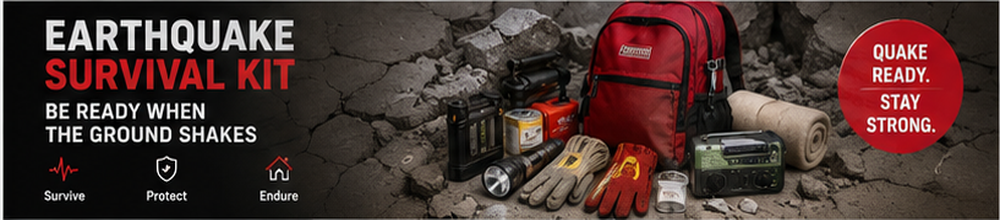
Unlike hurricanes, earthquakes arrive without warning: you have seconds, not days, to react. This makes pre-event preparation uniquely critical: your earthquake preparedness kit and your household's knowledge of what to do must be in place before the ground shakes. This guide covers the correct response during a quake, what to have ready beforehand, and the specific supplies that matter most in the days of disruption that follow a major seismic event.
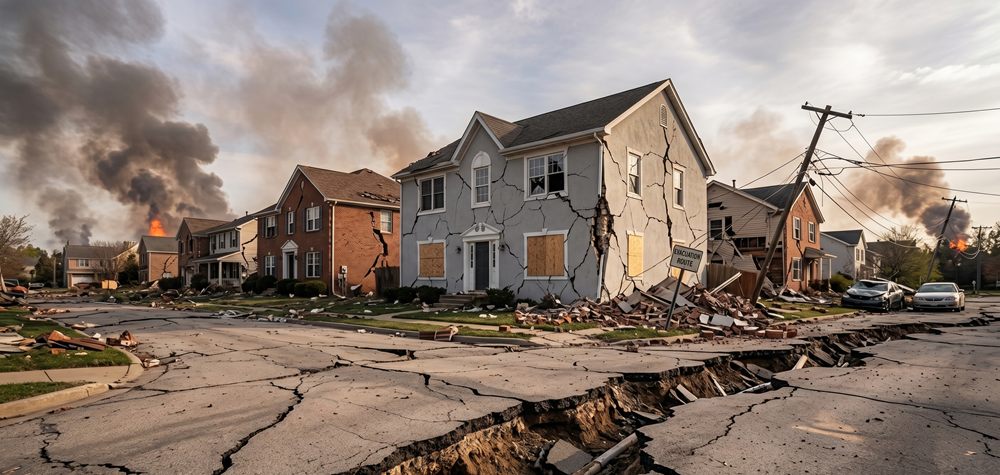
During the Earthquake: Drop, Cover, Hold On
The American Red Cross and FEMA have updated earthquake guidance: the "Triangle of Life" technique (crouching beside furniture) that circulated on social media is not recommended by any professional emergency management organisation. The current evidence-based guidance:
DROP to hands and knees immediately.
COVER your head and neck with your arms; if a sturdy table or desk is within reach, get under it.
HOLD ON until the shaking stops. Do not try to run or move to a different location during shaking: most injuries occur when people attempt to move.
Location-Specific Guidance
- Indoors: Stay inside; DROP, COVER, HOLD ON near an interior wall away from windows; protect your head
- In bed: Stay in bed; roll face-down and cover your head and neck with your pillow
- Outdoors: Move away from buildings, power lines, and streetlights; DROP to the ground and protect your head
- In a vehicle: Pull over away from buildings, trees, and bridges; set the parking brake; stay inside
- Do not: Run outside during shaking; stand in a doorway (modern engineering shows no advantage; door frames can collapse); use elevators after a quake
Securing Your Home Before an Earthquake
Most earthquake injuries come from falling objects, not structural collapse. Mitigation measures:
- Strap water heaters and large appliances to wall studs: these tip and fall in quakes, causing gas leaks and injuries
- Secure tall bookshelves, cabinets, and dressers with L-brackets to wall studs
- Move heavy items from high shelves to low storage: they become projectiles in a quake
- Use closed cabinet latches: cabinet contents launch across a room in strong shaking
- Secure the refrigerator with an anti-tip strap
- Know how to shut off your gas: have an adjustable wrench or gas shutoff tool near the meter; shut off gas if you smell gas after a quake or if instructed by authorities
- Check your home's seismic retrofitting: if you're in a high-risk area (California, Pacific Northwest, New Madrid Zone), a structural engineer can assess cripple-wall bracing and mudsill bolting; grants and incentives are often available
Earthquake Kit Checklist
Earthquake kits have specific priorities: immediate post-quake rescue capability, 72-hour survival without any external services, and extended disruption supplies.
Immediate Response (First Hour)
- Work gloves (leather or heavy canvas) × 2 pairs: for handling debris and broken glass
- Sturdy shoes (pre-positioned near bedside): broken glass is everywhere post-quake; bare feet are dangerous
- Flashlights + headlamps × 1 per person: power fails immediately
- Whistle × 1 per person: for signalling if trapped under debris
- Gas shutoff wrench: near the gas meter
- Fire extinguisher (ABC class) × 2: gas line breaks and electrical shorts cause post-quake fires
72-Hour Survival Kit
- Water: 1 gallon per person per day × 3 days minimum; 7 days preferred (see the Water for Earthquake Kit Planning section below)
- Food: 72-hour supply of ready-to-eat non-perishables
- First aid kit (comprehensive: trauma capability)
- NOAA weather radio (hand crank)
- Phone charger + power bank (fully charged)
- Medications (30-day supply)
- Dust masks (N95): post-quake debris, demolished drywall, and structural concrete create respiratory hazards
- Cash ($300+ in small bills)
- Important documents (waterproof sleeve)
- Crowbar or pry bar: for opening jammed doors and moving debris
Extended Disruption (Week+)
- 7–14 day food supply
- Portable water filter (Sawyer Squeeze or Berkey)
- Portable solar generator or power station
- Temporary shelter materials (heavy-duty tarps, tent): if home is uninhabitable
- Portable propane stove + fuel
- Sanitation kit (bucket toilet, waste bags, hand sanitiser)
Water for Earthquake Kit Planning
Earthquakes create a water-specific risk other disasters don't: cracked water mains and treatment plant damage can make municipal water unsafe or unavailable for days to weeks, not hours: and you likely won't get advance warning to fill containers first, the way you might before a hurricane.
Home Supply vs Evacuation Water
- Home supply: Because earthquakes often make roads impassable and rescue/utility crews stretched thin, sheltering in place is common after a major quake: store more than the 3-day minimum if you're in a high-risk seismic zone. Use our Emergency Water Kit & Storage Guide to calculate your household's full requirement and compare container options.
- Evacuation water: If your home is red-tagged or unsafe to re-enter, you need portable water you can grab on the way out: keep a few sealed bottles or a collapsible container with your grab-and-go supplies, separate from bulk home storage.
- Water heater as backup source: Most 40–50 gallon water heaters hold potable water even when municipal pressure fails; access it via the drain valve at the tank's base if you strap it (see Securing Your Home above) so it doesn't tip and rupture during shaking.
Container Placement and Access
- Never store heavy water containers on high shelves: they become falling hazards during shaking and may be unreachable if a shelf collapses
- Floor-level or low-shelf storage in a closet or garage keeps water both safer during the quake and accessible immediately after
- Don't block your water storage behind furniture that could shift or fall in front of it during shaking
- Keep at least a portion of your water supply in a location separate from your main kit (e.g., garage and a bedroom closet) in case one area becomes inaccessible
After the Earthquake
- Check for injuries: Provide first aid; do not move severely injured people unless they face immediate danger
- Check for hazards: Gas smell → open windows, leave immediately, call 911 from outside; fire → exit immediately; water line leak → shut off main
- Inspect your home: Look for cracks in foundations, chimneys, and load-bearing walls before re-entering; do not use the chimney until it has been inspected
- Do not flush toilets until you know sewer lines are intact: cracked sewer lines cause sewage backup
- Communicate: Text messages travel better than voice calls when networks are congested; send a status text to your out-of-area contact
- Conserve: Use stored water and food; do not assume utilities will be restored quickly
Aftershock Preparedness
Aftershocks are earthquakes that follow a main event: they can be nearly as strong as the original quake and occur for weeks or months afterward. After a major quake:
- Expect significant aftershocks: assume more are coming
- Re-evaluate any damaged structure's habitability after each major aftershock
- Pre-position your earthquake kit at an accessible location within your home or at your evacuation assembly point
- A heavily damaged chimney that survived the main quake may collapse in an aftershock: stay away from chimneys
Check Your Earthquake Kit Before an Emergency
Unlike hurricanes or tornadoes, earthquakes give no forecast window to top up supplies beforehand: your kit has to already be ready. Check it twice a year (tie it to daylight saving time changes, an easy reminder):
- Confirm the gas shutoff wrench is still at the meter, not misplaced elsewhere
- Test flashlights/headlamps and replace batteries even if they still work
- Verify sturdy shoes are still bedside for every household member (not moved during cleaning)
- Rotate water and food per expiration dates
- Re-check that furniture straps, museum putty, and cabinet latches are still secure after any recent moving or redecorating
- Confirm your household's out-of-area contact and meeting point are still current
For the full household emergency kit this fits into (not just quake-specific items), see our 72-Hour Emergency Kit guide. For other regional hazards you may need to prepare for alongside earthquakes, see our Natural Disaster Preparedness hub.
Recommended Products
Kidde FA110 Multi Hazard Emergency Escape Ladder (2-Story)
In an earthquake, interior stairways may be damaged or blocked by debris. A two-story home needs a secondary egress option from upper floors. The Kidde FA110 is a permanently pre-installed window escape ladder rated for two-story heights: it deploys in seconds, hooks over a standard windowsill, and supports up to 1,000 lbs. For families with bedrooms on the second floor in earthquake country, this is a critical safety item that most households overlook. Every upper-floor bedroom should have one stored under the bed or in the closet. Pre-install and test it before an emergency occurs.
- Two-story rated; deploys from window in seconds
- 1,000 lb capacity; permanently pre-installed design
- Critical for blocked or damaged stairway egress
Quake Hold Furniture Museum Putty (Non-Toxic, 8 Pieces)
QuakeHold Museum Putty is the simplest, cheapest, and most overlooked earthquake preparedness measure for most households: it adheres objects to shelves and surfaces, preventing them from falling during earthquake shaking. A 2.64-oz pack secures approximately 8 items: picture frames, lamps, pottery, electronic devices, decorative items, and kitchen items that become dangerous projectiles in a quake. Non-toxic, removable, and leaves no permanent residue: safe for renters and all surfaces. At under $10 per pack, it eliminates the most common source of earthquake injuries (falling objects) at minimal cost. Every home in a seismic zone should have multiple packs in use.
- Adheres objects to shelves: prevents projectile injuries
- Non-toxic; removable; no permanent residue: safe for renters
- Under $10: the most cost-effective earthquake injury prevention available
Earthquake Grab & Go Emergency Survival Kit (4-Person, 72-Hour)
A pre-assembled 72-hour earthquake kit for four people covers the most critical immediate-response needs without requiring assembly during an emergency. These kits typically include food bars, water pouches, emergency blankets, first aid supplies, light sticks, whistles, and dust masks: precisely the items you need in the first hours after a major quake. The advantage over self-assembly is that everything is pre-packed in a single waterproof bag ready to grab. Supplement with a dedicated water supply (WaterBOB), medications, and your family's specific needs. Look for kits that meet ANSI emergency kit standards and include an N95 respirator rather than simple dust masks.
- 4-person 72-hour kit: immediate earthquake response needs covered
- Pre-packed waterproof bag: grab and go in seconds
- Supplement with personal medications, N95 masks, and water storage
Earthquake Preparedness FAQ
Should I stand in a doorway during an earthquake?
No. The doorway myth dates from early 20th century adobe construction where the door frames were the only reinforced structural element. In modern wood-frame and concrete construction, doorways provide no more protection than any other part of the room: and they don't protect you from falling objects. The current evidence-based guidance from FEMA, Red Cross, and structural engineers is: DROP to the floor; COVER your head and neck under a sturdy table or desk if available, or against an interior wall; HOLD ON until shaking stops. If no furniture is available, kneel on the floor away from windows with your arms covering your head.
How long after an earthquake is it safe to use tap water?
Do not assume tap water is safe after a major earthquake until your local water utility issues a clearance notice. Earthquakes can crack water mains, allowing contamination to enter the distribution system. Boil water orders are common after major quakes. If you smell gas after a quake, avoid using any water or electrical systems until gas service is confirmed clear. Use your stored water and a water filter or purification tablets for any water you're uncertain about. Follow your local utility and emergency management announcements for water safety guidance.
What should be on an earthquake preparedness checklist?
An earthquake preparedness checklist has two parts: home mitigation and supply preparation. Mitigation: strap water heaters and tall furniture to wall studs, use museum putty on shelves, know your gas shutoff location. For your earthquake kit list: work gloves and sturdy shoes at bedside, flashlights and headlamps, a whistle per person, a gas shutoff wrench, ABC fire extinguisher, 72-hour food and water supply, N95 masks, a portable water filter, a crowbar, and a 30-day medication supply. Pre-position your earthquake kit where it's accessible - not in a garage that may be blocked by a collapsed door.
What is the best earthquake kit to buy for home preparedness?
The best earthquake kit combines immediate response items with a full 72-hour supply. For immediate response: work gloves, sturdy shoes stored near the bed, a flashlight, a whistle, and a gas shutoff wrench. For the 72-hour supply: a pre-assembled earthquake survival kit bag (such as the Earthquake Grab & Go Emergency Kit) is the fastest path to baseline coverage. Supplement any pre-made kit with N95 masks, a crowbar, your own prescription medications, and enough stored water for your household - pre-made kits rarely include enough water.