Summer Power Outage Kit: How to Stay Safe When the AC Goes Down
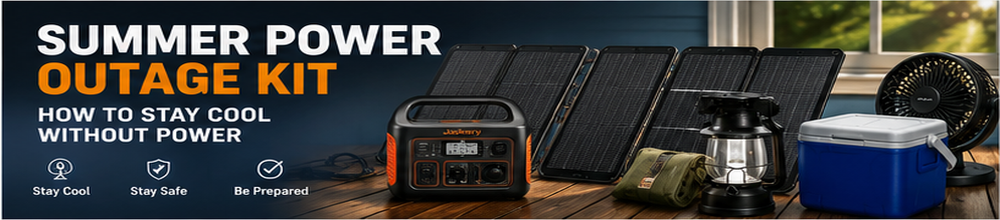
Heat is the deadliest weather condition in the United States - it kills more people annually than hurricanes, tornadoes, and floods combined, according to the CDC. When a summer power outage shuts down your air conditioning, the danger escalates faster than most people expect. A properly assembled summer power outage kit built around emergency supplies for power outages is not just about comfort: it is life-safety preparedness. This guide covers what to stock, how to stay cool in both apartments and houses, how to protect your food, and which emergency preparedness products give you the most protection per dollar spent.
In my CERT training work, I run an exercise where I ask participants what they'd actually do on day two of a summer blackout with outdoor temperatures over 95°F. The honest answer, for most households, is almost nothing - because most emergency preparedness kit for power outage planning focuses on flashlights and food, not on the thermal threat that actually kills in summer outages. What follows fixes that gap.
Editor's Pick - Best Summer Outage Power Station
Jackery Explorer 1000: The Power Station That Keeps Your Whole Home Running Through a Blackout
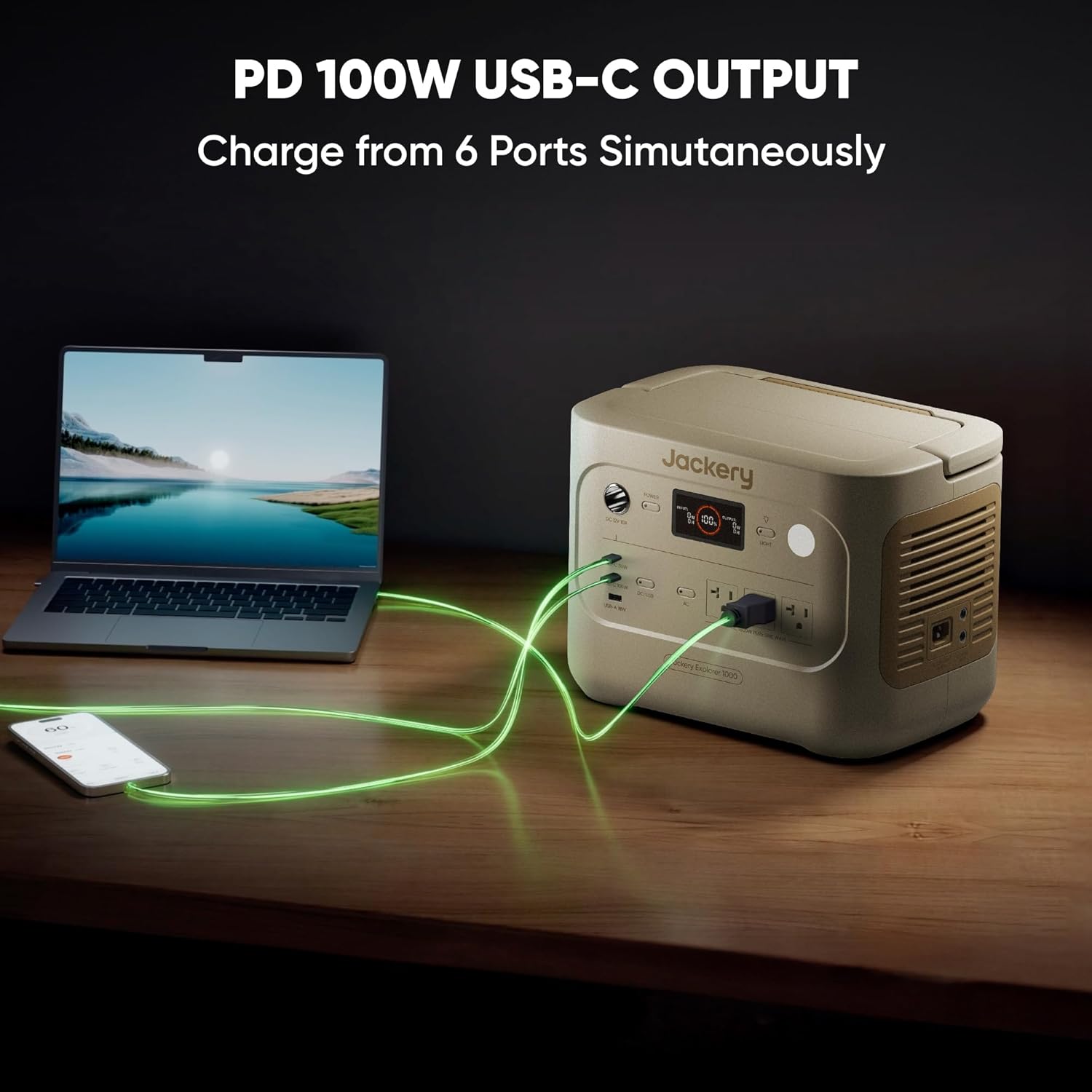
If there is one piece of gear I tell every household to have ready before summer, it is a portable power station that can be recharged by solar. The Jackery Explorer 1000 gives you 1,002Wh of clean, silent power - enough to run a battery fan continuously for 18+ hours, charge every phone and laptop in the house dozens of times, and keep a CPAP running through the night. The PD 100W USB-C port handles two laptops at full speed simultaneously. Six ports charge the whole household at once. And when you pair it with a solar panel, it recharges entirely from sunlight during the outage - no fuel runs, no fumes, no generator noise that violates HOA rules. I have field-tested portable power stations in extended-deployment wildland fire operations. This is the tier of capacity that actually covers a real multi-day outage.
- 1,002Wh capacity - run a 50W fan continuously for 18+ hours without recharging
- PD 100W USB-C output - charge two laptops at full speed at the same time
- 6 output ports simultaneously - AC outlets, USB-A, and USB-C at once
- Solar recharge ready - up to 400W solar input, recharge mid-outage from sunlight
- Silent, zero-emission - completely safe to run indoors all day and night
Summer Power Outage Kit: Essential Items at a Glance
Everything you need, with direct links. Details and usage guidance for each item follow in the full article below.
| Item | What It Does | Buy |
|---|---|---|
| Jackery Explorer 1000 | 1,002Wh power station - runs fans, devices, and CPAP for days; solar recharge capable | Amazon ↗ |
| OPOLAR Battery Fan | Built-in 10,000mAh battery, up to 26 hours on low, USB-C rechargeable | Amazon ↗ |
| Mission Enduracool Towels | Evaporative cooling to ~30°F below ambient - neck and wrists, reusable | Amazon ↗ |
| Coleman 54-Qt Cooler | Holds ice 4 days - protects medications, insulin, and perishable food | Amazon ↗ |
| Midland ER310 Weather Radio | NOAA alerts, hand-crank + solar backup, charges your phone via USB | Amazon ↗ |
| Liquid IV Electrolytes | Replaces sweat-loss minerals - critical for sustained heat exposure | Amazon ↗ |
| Black Diamond Spot Headlamp | Hands-free lighting, 400 lumens, waterproof - one per person | Amazon ↗ |
First 30 Minutes: Summer Priority Actions
The first half hour after a summer power outage sets the tone for everything that follows. Act deliberately - before the indoor temperature starts climbing:
- Close all blinds and curtains immediately. South- and west-facing windows in direct sun can add 10–15°F to a room's temperature. Closing blinds is the single highest-impact passive cooling action you can take and costs nothing.
- Set up your fans before it gets hot. Battery fans and portable power stations should be deployed now, not after the house becomes uncomfortable. Position a fan at a low window to draw cooler outside air in if outdoor temperature is lower than indoor - typically early morning outages benefit most from this.
- Close the refrigerator and leave it closed. A closed refrigerator stays safe for about four hours. A closed freezer holds 24–48 hours. Decide what you need and get it in one trip.
- Check your NOAA weather radio. Duration matters enormously in a summer outage. A two-hour outage requires no dramatic action. A 48-hour outage in a heat wave is a medical emergency in the making. Know which one you're dealing with.
- Assess vulnerable household members. Elderly adults, infants, and people on certain medications (diuretics, antihistamines, antipsychotics) are at significantly elevated heat risk. They need attention first.
- Go low. Heat rises. If your home is multi-story, move activity to the ground floor or basement immediately. A basement can be 15–20°F cooler than the upper floors during a heat event.
Cooling Your Apartment Without Power
Apartment dwellers face the hardest constraints during summer outages: no generator option (no exterior exhaust), no access to a basement in most cases, and mid-floor units that trap heat. Your entire survival kit for power outage in summer must rely on portable, battery-powered emergency supplies and smart passive cooling techniques.
Cross-Ventilation Strategy
If outdoor air is cooler than indoor air - typically before 9 a.m. and after 8 p.m. during heat waves - open windows on opposite sides of the apartment and position fans to create a cross-draft. One fan pulling air in at a low window on the cooler (shaded) side, one fan or open window exhausting hot air on the opposite side. This is more effective than a single fan in a single window.
Once outdoor temperature exceeds indoor temperature (typically mid-morning during a heat wave), close all windows and blinds to trap the cooler interior air as long as possible.
Personal Cooling Techniques
- Wet cooling towels on the neck and wrists. Major blood vessels run close to the skin at these points. Cooling the blood that circulates through them lowers core body temperature efficiently. Reusable evaporative cooling towels - wet them, wring them out - remain cooler than ambient temperature for 30–60 minutes per activation.
- Spray bottle misting. A spray bottle misting the skin while a battery fan blows over it is a surprisingly effective personal cooler. Evaporative cooling can reduce perceived temperature by 10–15°F. Fill several spray bottles while the tap runs cold.
- Cold wet bandanas. From my time working wildland fire in extreme heat, this was standard protocol for the crew - wet bandana on the back of the neck, rotated every 20–30 minutes. It works, it costs nothing, and it's the first thing I tell CERT participants to add to their summer outage plan.
- Stay hydrated. The body's primary cooling mechanism is sweating, which requires hydration to work. Drink water consistently - don't wait until you're thirsty. In extreme heat, adults need significantly more than the standard 8 glasses per day.
- Avoid caffeine and alcohol. Both are diuretics that accelerate dehydration. During a summer outage in heat, switch to water and electrolyte drinks.
Know Your Local Cooling Center
FEMA and local emergency management agencies designate public cooling centers - libraries, community centers, and municipal buildings - that remain open and air-conditioned during widespread outages. Knowing the nearest one before you need it is standard emergency preparedness. Check your city's emergency management website or call 211 during an outage.
Cooling Your House Without Power
Houses have more structural options for summer outage cooling than apartments, including the possibility of running a generator for targeted cooling equipment:
- Basement refuge. A finished basement maintains temperatures 10–20°F below upper floors during heat emergencies. Even without any powered equipment, relocating family activity and sleeping to the basement is highly effective and should be the first action in any house.
- Generator-powered window AC unit in one room. A small 5,000–8,000 BTU window AC unit draws 500–900W. A mid-range generator or large portable power station can run a single window unit in one room, creating a cool zone the whole household uses during peak afternoon heat. Generators must run outdoors only, at least 20 feet from windows.
- Whole-house fan (if pre-installed). These exhaust hot attic air and draw cooler outdoor night air through the house. If yours runs on a standard 120V circuit, a generator can power it to dramatically reduce indoor temperature during cooler overnight hours.
- Pre-freeze water bottles. Fill water bottles 3/4 full and freeze them before an outage (or immediately when one begins). They serve as both cold drinking water as they thaw and portable ice packs for direct body cooling or for the cooler.
- Cook outdoors exclusively. Indoor cooking noticeably raises interior temperature. During a summer outage, use a gas grill or camp stove outdoors for all meal preparation.
- Mylar window reflectors. Emergency Mylar blankets (silver side out) taped over sun-facing windows dramatically reduce solar heat gain - more effective than standard blinds at blocking radiant heat.
Top Summer Power Outage Emergency Supplies
OPOLAR Battery-Operated Desk Fan (10,000 mAh)
This is the cornerstone of any apartment summer power outage kit. It runs 3–26 hours on a single charge depending on speed setting, charges via USB-C (compatible with any portable power bank), and is quiet enough to sleep next to. In my experience, a quality battery fan is the single most important emergency preparedness product for summer apartment outages - it keeps air moving against skin, enabling evaporative cooling even when the room itself is hot. The built-in battery means it works independently of any other power source, though pairing it with a power bank extends runtime indefinitely.
- Built-in 10,000 mAh battery - up to 26 hours on low speed
- USB-C charging - recharge from any power bank
- 3 speed settings; quiet enough for sleeping
- Compact and portable - use on a bedside table, desk, or floor
Want a fan that runs on disposable batteries instead, or one that works on both battery and wall power? See our full Best Battery-Powered Fans for Power Outages comparison.
Mission Enduracool Cooling Towels (3-Pack)
Evaporative cooling towels are one of the most effective and inexpensive emergency preparedness products for summer heat. Wet them, wring them out, and they activate to a temperature significantly below ambient air - typically 30°F cooler than the surrounding air. Drape over the neck, wrists, or forehead for continuous personal cooling. These are reusable indefinitely, require no power, weigh almost nothing, and belong in every summer power outage emergency kit. What worked for me in wildland fire operations: rotating two bandanas in a cooler of water and alternating them on the back of the neck every 20 minutes. The Mission towels work on exactly the same principle, but last longer and stay cooler.
- Activates to ~30°F below ambient air temperature when wet
- Reactivates by re-wetting - reusable indefinitely
- UPF 50 sun protection when worn as a neck wrap
- Machine washable; lightweight for go-bag inclusion
Jackery Explorer 500 Portable Power Station
A portable power station transforms your battery fan from a short-run device into an extended cooling system. The Jackery Explorer 500 delivers 518Wh of capacity - enough to run a 50W fan for 8+ hours continuously, charge smartphones 40+ times, and power a CPAP machine for a full night. For house dwellers, it can power a small window AC unit for 30–45 minutes at a time - enough to cool a single bedroom before sleep. This is the core power source for any serious summer power outage emergency kit, and pairing it with a 100W solar panel means you can recharge it during the outage itself.
- 518Wh capacity - powers fans, devices, and small appliances
- AC outlet (500W), USB-A, USB-C, 12V car port
- Recharges from wall, car, or solar panel
- Silent operation - completely safe indoors
Coleman 54-Quart Steel-Belted Cooler
In a summer outage, your refrigerator becomes a liability after four hours. A high-quality cooler becomes your food and medication preservation system. The Coleman Steel-Belted holds ice for up to four days - long enough to cover most multi-day outage scenarios. Pre-load it with block ice (not cubed - it melts far more slowly) and transfer your most critical refrigerator contents: insulin and medications first, then proteins and dairy. A quality cooler is the most overlooked item in summer power outage survival supplies, yet it protects both your health and your food budget.
- Holds ice up to 4 days in moderate conditions
- 54-quart capacity - holds medications, proteins, and key perishables
- Steel construction resists crushing and UV degradation
- Drain plug for easy post-use cleanup
Food Safety & Emergency Food Supplies in a Summer Outage
Food safety becomes critical faster in summer than in any other season. High ambient temperatures accelerate bacterial growth in food that has lost refrigeration - and food poisoning during an outage compounds an already stressful situation with a medical problem.
The 4-Hour Refrigerator Rule
The USDA is clear: a refrigerator kept closed and unopened stays safe for approximately four hours after power loss. Beyond that, perishables - meat, poultry, seafood, dairy, eggs, cooked leftovers, and cut fruits - should be treated as compromised if you cannot verify the temperature stayed at or below 40°F. The rule in a summer outage: when in doubt, throw it out. Food poisoning treatment may be difficult to access during a widespread outage event.
A full freezer maintains safe temperature for 24–48 hours with the door kept closed. A half-full freezer holds for about 12 hours. If you know an outage is coming, fill empty freezer space with water bottles or bags of ice to extend the hold time.
Emergency Food to Stock for Summer Outages
The best emergency supplies for power outage food situations require no cooking or refrigeration - especially important in summer when cooking indoors raises the temperature you're already fighting:
- Canned proteins: Tuna, chicken, salmon, and beans provide protein without refrigeration. Stock enough for 72 hours per person minimum.
- Ready-to-eat foods: Peanut butter, crackers, trail mix, granola bars, and dried fruit require no preparation or heat.
- Manual can opener: The most commonly forgotten item in any power outage kit. Every household needs one.
- Electrolyte drinks: Sweat loss in heat increases electrolyte depletion beyond what plain water replaces. Stock Pedialyte packets, Liquid IV, or similar for any household member exerting themselves in the heat.
- Comfort foods: Hard candy, chocolate (watch melting), and familiar snacks matter for morale, especially with children in a stressful, hot household.
See our full non-perishable food list for a comprehensive breakdown of shelf-stable options and quantities by household size.
Water
Heat dramatically increases water needs. The standard 1 gallon per person per day is a minimum baseline; during active heat exposure, adults may need 1.5–2 gallons per day. Store-bought water bottles are the simplest solution for short outages. For extended scenarios, a quality water filter gives you access to any freshwater source if municipal supply is affected.
Complete Summer Power Outage Kit Checklist
| Item | Qty (2-person) | Priority |
|---|---|---|
| Battery/USB fan (10,000 mAh built-in or USB-C) | 1–2 | P1 |
| Portable power bank (20,000 mAh) for fan charging | 1–2 | P1 |
| Evaporative cooling towels | 4 | P1 |
| Spray bottles (for misting) | 2 | P1 |
| Stored water (1–2 gallons/person/day, 3-day minimum) | 6–12 gal | P1 |
| Manual can opener | 1 | P1 |
| Quality cooler + block ice supply | 1 cooler | P1 |
| Ready-to-eat non-perishable food (3-day supply) | Per person | P1 |
| Electrolyte drink packets (Pedialyte, Liquid IV) | 20+ | P1 |
| LED headlamp + spare batteries | 1/person | P1 |
| NOAA hand-crank weather radio | 1 | P1 |
| Local cooling center locations (printed) | 1 card | P1 |
| Emergency Mylar blankets (as window reflectors) | 4–6 | P2 |
| Portable power station (500Wh+) | 1 | P2 |
| Solar charging panel (for power station recharge) | 1 | P3 |
| Generator (outdoor use only) + window AC unit | Optional | P3 |
Frequently Asked Questions
How do I stay cool in an apartment during a summer power outage without a generator?
Focus on four strategies: (1) battery or USB fans powered by a portable power bank or power station; (2) evaporative cooling towels on the neck and wrists; (3) spray bottle misting with a fan blowing over wet skin; and (4) passive techniques - close blinds on sun-facing windows, move to the lowest floor, avoid cooking indoors. Know your nearest public cooling center and use it during dangerous afternoon peak heat (1–5 p.m.).
What are the signs of heat stroke during a power outage?
Heat stroke is a medical emergency. Signs include: body temperature above 103°F, hot and dry skin (the person has stopped sweating), rapid and strong pulse, confusion or loss of consciousness. If you observe these symptoms, call 911 immediately and move the person to the coolest available location. Apply cool (not cold) wet cloths to the skin. Do not give fluids to an unconscious person. Heat exhaustion (heavy sweating, weakness, pale clammy skin, fast weak pulse, nausea) is the warning stage before heat stroke - treat it aggressively with hydration and cooling.
How long will my refrigerator stay safe during a summer power outage?
About four hours if the door stays closed. After that, perishable foods - meat, dairy, eggs, cooked leftovers, cut produce - should be discarded if you cannot verify they stayed at or below 40°F. Transfer your most important items (medications, proteins) to a quality cooler with block ice immediately when the outage begins. A full freezer holds safe temperature for 24–48 hours with the door kept closed.
Who is most at risk during a summer power outage?
Elderly adults (65+) have reduced ability to regulate body temperature and are the highest-risk group - the majority of heat fatalities are in this age group. Infants and young children are also high-risk. People taking certain medications are at elevated risk: diuretics, antihistamines, antipsychotics, anticholinergics, and some blood pressure medications all impair the body's heat response. People with heart disease, obesity, or poor physical fitness are additionally vulnerable. If anyone in your household falls into these categories, have a specific heat emergency plan that includes early evacuation to a cooling center.
What emergency preparedness products are most useful for summer power outages?
Ranked by impact per dollar: (1) evaporative cooling towels (~$7–8 each) - highest impact for lowest cost; (2) a large portable power bank (~$30–50) to keep a USB fan running for days; (3) a battery fan with built-in battery; (4) a quality cooler for food and medication preservation; and (5) a portable power station for extended fan and device power. A hand-crank NOAA weather radio is essential for knowing outage duration and whether to seek a cooling center.
Should I open or close windows during a summer power outage?
It depends on whether outdoor air is cooler than indoor air. Open windows early morning (before 9 a.m.) and late evening (after 8 p.m.) when outside air is typically cooler - use fans to drive cross-ventilation. Close everything when outdoor temperatures exceed indoor temperatures (usually mid-morning during a heat wave) and keep blinds shut to trap cooler interior air. During a prolonged heat wave, this thermal management is the single most important passive cooling strategy for both apartments and houses.
Build Your Summer Power Outage Kit
A battery fan, cooling towels, a spray bottle, and a quality cooler covers the essentials for under $200. Add a portable power station and you're prepared for multi-day summer outages in both apartments and houses. Stock it now - not when the outage has already started and the house is already heating up.
Shop Summer Outage Supplies on Amazon ↗