Medical & Health Emergency Preparedness Hub
Medical preparedness is one of the most overlooked parts of emergency planning: and one of the most important. When hospitals are overwhelmed or inaccessible, your ability to handle injuries and manage health conditions at home could be life-saving.
These guides are built around Red Cross, CDC, and FEMA guidance. They cover everything from choosing a first aid kit to specialist preparation for pregnant women, infants, diabetics, and people with disabilities.
Building your medical preparedness starts with three distinct layers: a basic first aid kit for cuts, burns, and minor injuries; a trauma kit or IFAK for life-threatening bleeding; and a home medical supply kit that covers medications and ongoing care when pharmacies are inaccessible for days or weeks. Most households only have the first layer - and that leaves significant gaps in a real emergency.
Why Three Layers, Not One Kit
A Basic Kit and a Trauma Kit Solve Different Problems
A basic first aid kit handles the injuries most households actually encounter: cuts, burns, sprains. A trauma kit or IFAK exists for a narrower, more severe category: life-threatening bleeding, where a tourniquet or hemostatic gauze genuinely changes the outcome in the first few minutes before professional help arrives. Having only a basic kit leaves a real gap for that second category; having only a trauma kit without basic supplies leaves you unprepared for the far more common minor injuries.
Ongoing Medical Needs Don't Stop During a Disaster
Chronic conditions, prescription medications, and routine health maintenance don't pause because a disaster is happening, and a pharmacy or clinic being inaccessible for days or weeks is a realistic outcome of many emergencies. A home medical supply kit addresses this third, separate need: not injuries, but continuity of ongoing care.
The table below maps each kit type to the emergencies it covers, so you can identify which layer to prioritise for your household.
| Kit Type | Best For | Key Contents | Priority Level |
|---|---|---|---|
| Basic First Aid Kit | Cuts, burns, sprains, minor injuries | Bandages, antiseptic, gauze, pain relief, nitrile gloves | Everyone - start here |
| Trauma Kit / IFAK | Life-threatening bleeding, penetrating wounds | Tourniquet, hemostatic gauze, chest seal, decompression needle | Adults with basic trauma training |
| Home Medical Supply Kit | Extended emergencies without pharmacy access | 30-day prescription stockpile, OTC meds, chronic care supplies | All households, especially those managing chronic conditions |
| Pandemic / Quarantine Kit | Infectious disease outbreaks and quarantine periods | N95 masks, gloves, disinfectants, fever reducers, pulse oximeter | All households |
| Medication Stockpile | Supply chain disruption, long-term emergencies | Prescription meds (30–90 day supply), OTC for common conditions | Anyone on regular medication |
Top Picks
A starting point across the three layers:
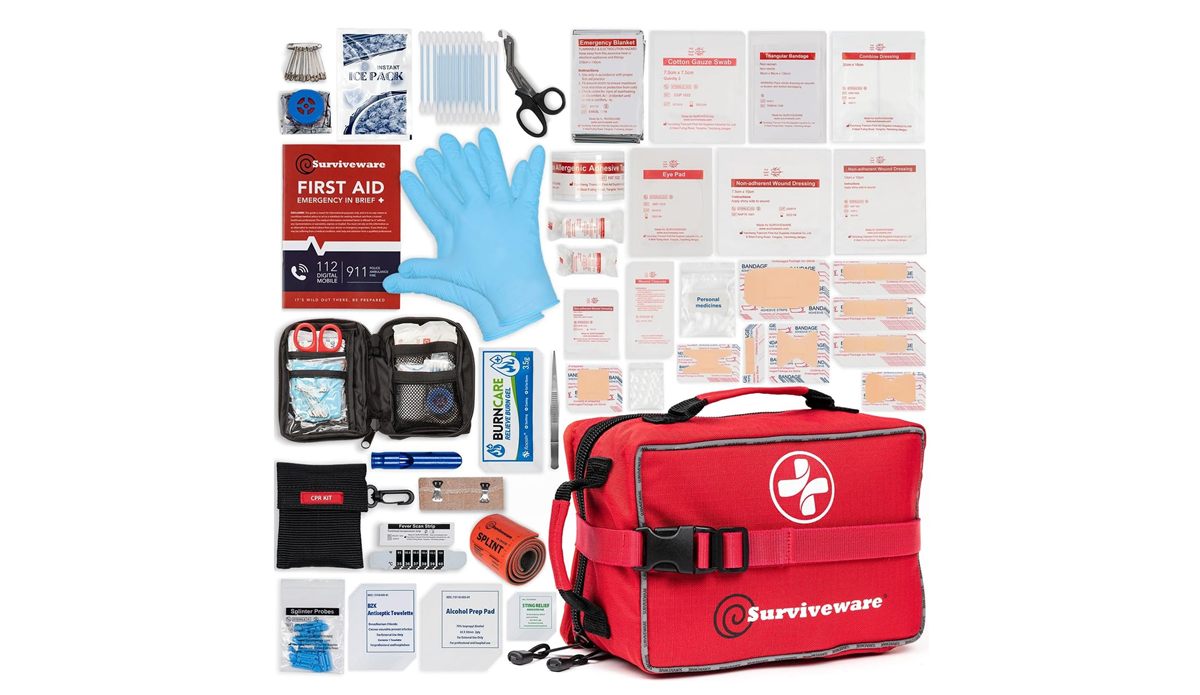
Surviveware Large First Aid Kit (200 Pieces)
Our top overall first aid kit recommendation. See our best first aid kits guide for trauma-capable and budget alternatives.
Check Price on Amazon ↗MyMedic MyFAK Pro First Aid Kit
Includes a CAT tourniquet and hemostatic gauze for the "Stop the Bleed" protocol. See our trauma kit & IFAK guide for the full comparison.
Check Price on Amazon ↗3M 8210 N95 Particulate Respirator (20-Pack)
The baseline respiratory protection every household should pre-stock. See our best N95 masks guide for comfort and chemical-hazard alternatives.
Check Price on Amazon ↗First Aid & Trauma
Start here if you're building medical preparedness from scratch: a basic kit first, then trauma supplies if your household includes anyone with Stop the Bleed or similar training.
- START HERE Best First Aid Kits for Emergencies: 2026 Complete Guide
- Best Trauma Kits & IFAKs for Preppers
- Home Medical Supply Kit: Build Your Emergency Medicine Cabinet
- CPR & First Aid Training Guide: Where to Learn & What to Know
- Emergency Dental Kit: Toothache & Dental First Aid Without a Dentist
- Red Cross & Ready America Emergency Kits: Reviewed & Compared
Pandemic & Respiratory
Infectious disease outbreaks and air-quality emergencies (wildfire smoke, chemical events) share a common gap in most households: no respiratory protection on hand before it's suddenly in short supply everywhere.
- NEW "Russian Flu" (Pneumonic Plague): What to Stock Up On
- Pandemic Survival Kit 2026: Complete Health Emergency Guide
- Best N95 Masks & Respirators for Emergency Preparedness
- Quarantine Supply Checklist: What to Have at Home
Medications & Specialist Needs
Standard medical-prep advice often assumes a healthy adult with no dependents; these guides address the real gaps for anyone managing chronic conditions, pregnancy, infants, or mental health alongside everything else.
- Medication Stockpile Guide: What to Store & How
- Emergency Preparedness for Pregnant Women: Complete Kit Guide
- Baby & Infant Emergency Kit: Complete Preparedness Guide for Parents
- Emergency Sanitation & Hygiene Kit: When Plumbing Fails
- Mental Health After a Disaster: Coping & Recovery Guide
Medical Emergency Preparedness FAQ
What medical supplies should every emergency kit include?
At minimum: adhesive bandages in multiple sizes, sterile gauze pads, medical tape, antiseptic wipes, nitrile gloves, a digital thermometer, ibuprofen, acetaminophen, antihistamines, and a CPR face shield. Add a tourniquet and hemostatic gauze if anyone in your household has basic trauma training. The Red Cross recommends a dedicated first aid kit for every car and every floor of your home.
How is a home medical supply kit different from a first aid kit?
A first aid kit handles acute injuries - cuts, burns, and sprains. A home medical supply kit covers ongoing health management when healthcare is inaccessible for days or weeks: prescription medication stockpiles, blood pressure monitors, glucose testing supplies, and a broad range of over-the-counter treatments. Think of it as your medicine cabinet prepared for two weeks without a pharmacy or clinic.
How much medication should I stockpile for emergencies?
FEMA recommends a minimum 7-day supply of all prescription medications, but most preparedness experts recommend 30 days. Talk to your doctor about getting a 90-day prescription to rotate through. For over-the-counter medications, keep a 30-day supply of pain relievers, antihistamines, antidiarrheals, and antacids. Our medication stockpile guide has a complete list organised by condition type.
Not sure where to start?
Start with our Beginner's Guide to Emergency Preparedness: a step-by-step roadmap that takes you from zero to prepared in under 30 days, for under $100.
Start Here →