- FEMA Survey
- Ready.gov
👍 How We Choose Our Recommendations
Every product on SurvivalStockUp is chosen on three criteria: not commission rates. We recommend what we'd actually put in our own bags.
📚 Explore Every Prep Category
Browse all 13 content categories below. Each links to dozens of in-depth guides, product reviews, and printable checklists tailored to that topic.
📊 Why Prepare? The Numbers Don't Lie
Emergency preparedness isn't paranoia - it's practical risk management backed by hard data. According to Ready.gov and FEMA research:
The US experiences an average of 1,000 tornadoes per year, along with dozens of hurricanes and major flooding events. Any one could affect your ZIP code.
28% of Americans have no emergency fund and no emergency supplies - meaning nearly 1 in 3 households is entirely unprepared for a 3-day disruption.
In major disasters, emergency responders can take 72 hours or more to reach affected households. For those 3 days, you are your own first responder.
A solid 72-hour emergency kit for a family of four costs less than $100 - about the same as a typical restaurant dinner. You can build it this weekend.
❓ Frequently Asked Questions
Click any question to expand the answer.
What should be in a basic survival kit?
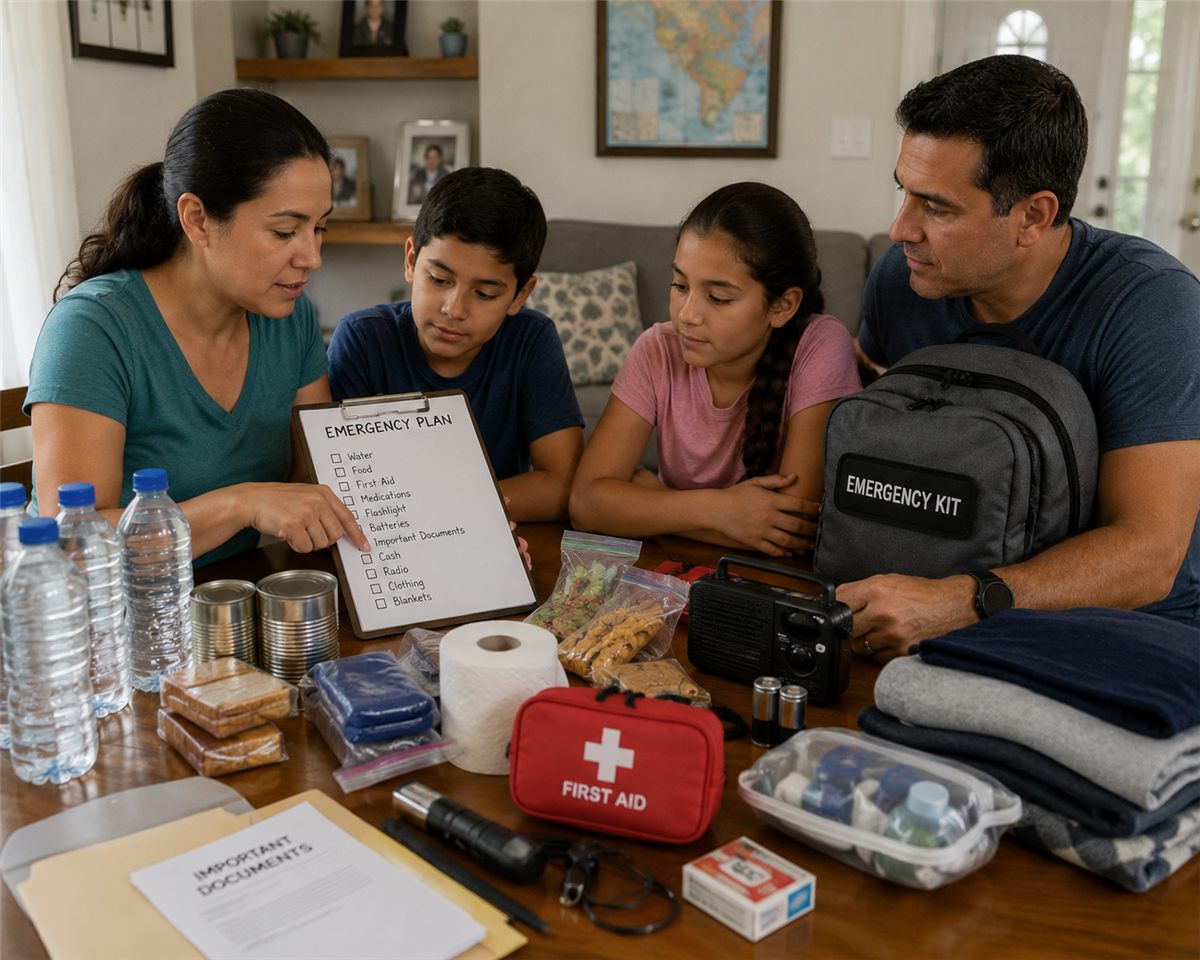
FEMA recommends every household keep: at least 1 gallon of water per person per day (3-day minimum), a 3-day supply of non-perishable food, a battery-powered or hand-crank radio, a flashlight with extra batteries, a first aid kit, a whistle, dust masks, plastic sheeting and duct tape, moist towelettes, garbage bags, a wrench or pliers to shut off utilities, a manual can opener, local maps, and a cell phone with chargers. You can cover all of this for under $100 with smart Amazon shopping.
How much does it cost to build a survival kit?
A solid 72-hour emergency kit for one person costs roughly $50–$80 on Amazon. For a family of four, expect $100–$150. A full 2-week supply - covering food, water, medical, and power - typically costs $300–$600. You don't need to spend it all at once: our prepping on a budget guide shows how to build it week by week starting at under $20.
What is a bug out bag and do I need one?
A bug out bag (BOB) is a pre-packed backpack with everything you need to survive 72 hours if you have to leave home quickly - wildfires, floods, chemical spills, or civil unrest. If you live in any disaster-prone area, a BOB is strongly recommended by FEMA and the Red Cross. Our bug out bag guide covers exactly what to pack and which bags are worth buying.
How much water should I store for an emergency?
The standard is 1 gallon per person per day. For a family of four over 72 hours, that's 12 gallons minimum. For a 2-week supply, you'd need 56 gallons. Use food-grade containers only, keep away from direct sunlight, and rotate every 6–12 months. Our emergency water storage guide covers containers, purification tablets, and filters in detail.
How long should my food supply last?
Start with 72 hours - the FEMA baseline. Then work toward 2 weeks, which covers most natural disaster scenarios. Serious preppers target 3 months to 1 year. Shelf-stable foods like freeze-dried meals, canned goods, and rice/beans can last 5–30 years if stored correctly. Our food storage guides cover each stage with product recommendations and calorie calculations.
Is prepping just for extreme survivalists?
Absolutely not. Most of our readers are regular suburban families, apartment dwellers, and retirees - not wilderness survivalists. Emergency preparedness is recommended by FEMA, the Red Cross, and the CDC for every household. Think of it like home insurance: you hope you never need it, but you're very glad you have it when a storm knocks out power for a week. Prepping is just practical adulting.
What's the difference between a bug out bag and a get home bag?
A bug out bag (BOB) helps you leave your home quickly and survive 72+ hours away from it. A get home bag (GHB) is a lighter bag kept in your car or office to help you get back home if you're caught away during an emergency. Most prepared households have both. See our get home bag guide and bug out bag guide for full details and product picks.
🏆 Our Top 3 Survival Kit Picks for 2026
Not sure where to start? These three products form the backbone of any solid emergency kit. We've researched hundreds of options - these three consistently offer the best value, reliability, and real-world performance.
Ready America 70380 Emergency Kit, 4-Person 3-Day Backpack
The best all-in-one starter survival kit for a family of four. Covers every FEMA checklist item in a single grab-and-go backpack: ideal if you want to be prepared immediately without building a kit piece by piece.
- 4-person, 72-hour supply in one backpack
- Includes food bars, water pouches, first aid kit, light & tools
- FEMA and Red Cross guideline compliant
- Fits in a closet - ready to grab in 10 seconds
LifeStraw Personal Water Filter
Clean water is your most urgent survival need - more urgent than food. The LifeStraw filters 99.9999% of bacteria and parasites from any water source. Weighs 2 oz. Lasts 1,000 gallons. Every kit needs one.
- Filters up to 1,000 gallons (4,000 litres)
- No batteries, pumping or chemicals needed
- Weighs just 2 oz - fits in a shirt pocket
- Works in rivers, ponds, even flood water
Midland ER310 Emergency Hand-Crank Weather Radio
When power is out and your phone is dead, a hand-crank NOAA weather radio is your lifeline to emergency broadcasts. The ER310 charges via crank, solar, or USB and doubles as a flashlight and phone charger.
- NOAA weather alerts - all 7 channels
- Hand crank, solar panel, and USB charging
- Built-in LED flashlight and phone charging port
- Compact enough for any bug out bag
🔥 Most Popular Guides Right Now
|
🎯 Beginner's Guide to Emergency Preparedness Start here if you're brand new to prepping. 30-day roadmap, zero overwhelm. |
🏈 Best Bug Out Bags 2026: Top 10 Reviewed Every budget, every family size. We tested the top-sellers on Amazon. |
|
🔒 72-Hour Emergency Kit: Complete Guide & Checklist The FEMA standard - what goes in, what to skip, and where to buy it. |
💳 Prepping on a Budget: Be Prepared for Under $100 Stretch every dollar. Our picks for maximum coverage at minimum cost. |
|
💧 Emergency Water Storage: 30 Days of Safe Drinking Water How much to store, how to purify, and which containers are actually safe. |
📚 Prepper Glossary A–Z: Every Survival Term Explained BOB, INCH, EDC, SHTF - decoded in plain English. |
💌 Get Free Weekly Survival Tips
Join 7,000+ subscribers who get our free Tuesday newsletter: actionable checklists, the best Amazon deals on prep supplies, and practical advice for everyday families - delivered straight to your inbox.
Subscribe Free - No Spam, Ever →