Family Bug Out Bag Guide: Best Go Bags for Every Age
Building a family emergency go bag is one of the most important things a parent can do: and one of the trickiest to get right. You need enough capacity for everyone's supplies, a bag the adults can actually carry, and a system that accounts for children who can't carry their full share. This guide gives you the best options reviewed specifically for families with kids.
Unlike solo bug out bags, a family go bag setup requires a strategy: how do you distribute the weight? Do you use one large family bag or individual bags? What do the kids carry? We answer all of this below, then review the best bags for every family size.
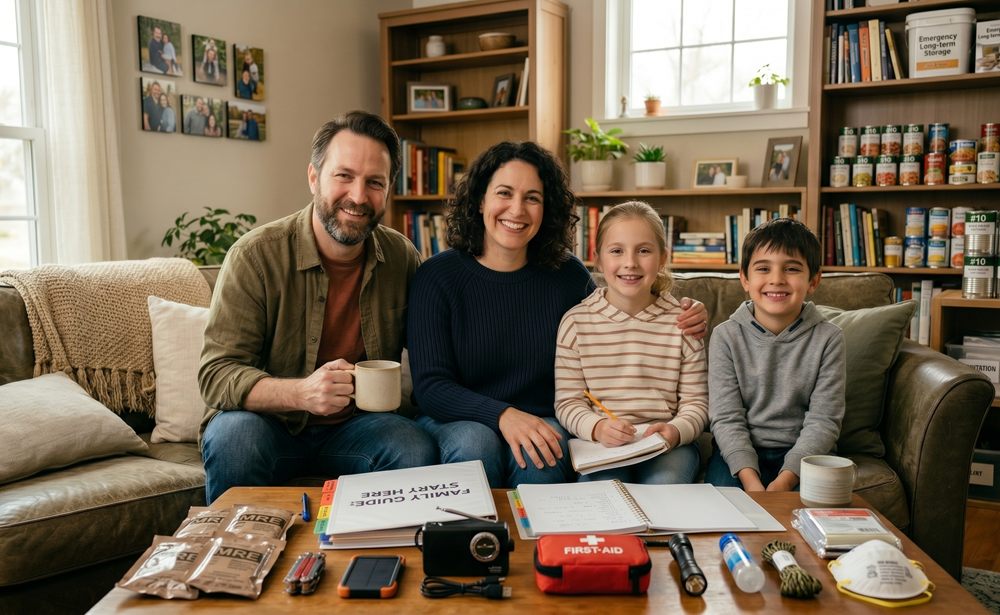
The Family Go Bag System: One Bag or Many?
Most preparedness experts recommend a distributed system rather than one giant family bag:
- Adults carry the bulk: Each adult has a 45–55L bag with water, food, shelter, and shared supplies
- Children carry what they can: Kids aged 7+ can carry a small 10–20L pack with their own clothing, snacks, comfort items, and a water bottle
- Infants and toddlers: Their supplies are distributed across the adult bags
This approach keeps any one person from being overloaded while ensuring everyone contributes at their capacity level. It also means if someone drops a bag, you don't lose everything.
Family of 4 Bug Out Bag: Packing Plan
Here's a concrete example for two adults and two school-age children, showing who carries what, at what weight, and roughly what the bags cost (contents are separate: see the full 72-Hour Emergency Kit checklist for item-by-item quantities).
| Family Member | Bag | Carries | Loaded Weight | Bag Cost |
|---|---|---|---|---|
| Adult 1 | 55L pack (e.g. 5.11 RUSH72) | Own clothing/first aid + shared shelter (tent/tarp) | ~30–35 lbs (20–25% bodyweight) | ~$130 |
| Adult 2 | 55L pack (e.g. 5.11 RUSH72) | Own clothing/documents/cash + shared cook system and water filter | ~28–32 lbs (20–25% bodyweight) | ~$130 |
| Child, age 10–12 | 20–22L kids' pack | Own clothing, snacks, flashlight, comfort item | ~7–9 lbs (10–13% bodyweight) | ~$45 |
| Child, age 6–9 | 15–18L kids' pack | Own snacks, comfort item, small water bottle | ~5–6 lbs (10% bodyweight) | ~$35–45 |
Bag costs alone run roughly $340–$350 for this setup. Weight percentages follow the same 20–30%-of-bodyweight rule used throughout our bug out bag guides: recheck child weights every 6–12 months as they grow.
Individual Essentials and Shared Equipment
- Individual (goes in each person's own bag): clothing, personal medications, a flashlight or headlamp, a water bottle, and any comfort item
- Shared (one adult carries, but the whole family depends on it): tent/tarp shelter, water filter, cook system and fuel, first aid kit, family documents, and cash: split across the two adult bags so no single lost bag takes out a critical system
Children and Infants
Exactly what a child carries (or doesn't) depends heavily on age. See the What to Pack section below for our full breakdown by age band: infants (0–2), toddlers (2–6), and school-age children (7–12).
Two-Person Bug Out Bag Setup
For a couple without children, the setup is simpler: no age-based packing decisions, no separate small packs, and less need to split systems across bags for redundancy since there are only two people to coordinate.
- Bag choice: Two 45–55L packs, one per adult (e.g. two 5.11 RUSH72s, or one RUSH72 plus one Osprey Farpoint for a lighter-carrying partner)
- Splitting shared gear: Divide shelter, cooking, and water filtration roughly 50/50 by weight rather than assigning every shared item to one person: if one bag is lost, the other person still has some of every critical system
- Loaded weight target: 20–30% of each person's body weight, same rule as solo bags
- Cost: Two mid-range 45–55L packs run roughly $180–$260 total, before contents
Best Go Bags for Families
5.11 Tactical RUSH72 (2-Pack System)
Two RUSH72 bags: one per adult: is the gold standard family go bag setup. 55L each means each adult carries half the family's supplies while maintaining a comfortable carry weight. The MOLLE system lets you attach kids' gear externally when they get tired. Premium quality that will last for decades.
- 55L each: 110L total capacity for a family
- Military-grade 1050D nylon: genuinely indestructible
- Full MOLLE for attaching children's packs when needed
Mountaintop 70L+ Internal Frame Family Pack
If you prefer one large bag (smaller families, one adult, or a very specific situation), the Mountaintop 70L+ provides enough room for a family of three's 72-hour supplies in one pack. The internal frame and padded hip belt make it genuinely wearable at full capacity. A practical compromise for smaller families.
- 70L+ capacity: family of 3 in one pack
- Internal frame with padded hip belt: transfers weight properly
- Rain cover included
Condor Assault Pack 46L (2-Pack)
Two Condor Assault Packs give a family of four adequate capacity at a fraction of the premium brand cost. Condor is a respected tactical brand: this isn't a throwaway bag, it'll take real abuse. The best value family go bag system for preppers on a tight budget.
- 46L each: 92L total for the family
- MOLLE webbing throughout
- Dramatically less expensive than premium options
Teton Sports Scout 3400 Kids' Pack: 22L
A properly sized, well-built kids' pack for children aged 7–12. The Scout 3400 has an internal frame, a chest strap, and a padded hip belt: all essential for carrying even a light load safely. Pre-loaded with the child's clothing, snacks, and comfort items, it weighs 5–8 lbs at most.
- 22L capacity: right-sized for school-age children
- Internal frame keeps load stable and off the lower back
- Padded hip belt transfers weight to hips even on small frames
Osprey Poco Plus Child Carrier
For families with infants or toddlers, a dedicated child carrier allows one adult to carry a young child hands-free while the other adult carries two adults' worth of supplies. The Osprey Poco Plus has a sunshade, a small cargo compartment for essentials, and exceptional carrying comfort. Not a replacement for a bug out bag but a critical addition for families with very young children.
- Carries children up to 48.5 lbs safely
- UPF 50+ sunshade included
- Small cargo area for essentials
What to Pack in a Family Go Bag
Family go bags need everything in a standard BOB, plus items specific to your children's ages and needs:
For Infants (0–2 years)
- Formula or breast milk storage bags (enough for 72 hours)
- Baby food pouches (no-prep, shelf-stable)
- Diapers (3-day supply: approximately 30 diapers for a newborn)
- Baby wipes (2 packs)
- Infant pain relief (acetaminophen drops, age appropriate)
- Pacifier and comfort item
- Change of clothing (3 sets)
- Infant sleeping arrangement (lightweight travel bassinet or carrier)
For Toddlers and Young Children (2–6 years)
- Familiar foods and snacks they will eat under stress
- Change of clothing (2–3 sets including warm layer)
- Small comfort toy or stuffed animal
- Children's OTC medications (fever reducer, antihistamine)
- Small entertainment: colouring book, cards, or small toy
- Child-specific first aid items (kid-sized bandages)
For School-Age Children (7–12 years)
- Their own properly fitted backpack with their personal items
- Water bottle and snacks
- Clothing change
- Flashlight or headlamp of their own
- Written card with family meeting point and emergency contacts
- Small comfort item and entertainment
What a 72-Hour Family Survival Kit Includes
The bags above are the container; the 72-hour supply is what goes inside them. Rather than duplicate that list here, our 72-Hour Emergency Kit guide has the full FEMA-sourced checklist plus a household-size table scaling water, food, and gear from one adult up to a family of four with pets. For a printable packing checklist specifically for the bag itself (not just what to buy), see our Bug Out Bag Checklist, which covers priority tiers and packing order. If you'd rather skip the shopping list entirely, our complete pre-packed bug out bags comparison covers kits that already have food, water, and gear included, plus what they still leave out for a family.
Family Go Bag FAQ
Should each family member have their own go bag?
Adults should always have their own bag: the weight distribution of putting everything in one bag is impractical for any distance. For children: kids aged 7+ can and should carry a small (10–20L) pack with their own clothing and supplies. Children under 7 have their supplies distributed across the adult bags. Infants require a carrier in addition to a separate supply bag.
How much should a family go bag weigh?
Each adult's bag should weigh no more than 20–30% of their body weight when loaded. For a 140 lb adult, that's 28–42 lbs. Children's packs should be no more than 10–15% of their body weight: a 60 lb child carries 6–9 lbs maximum.
What's the most important addition for a family with a baby?
A hands-free infant carrier. With a baby or toddler who can't walk long distances, you need to be able to carry both the child and your emergency supplies. A quality child carrier lets one adult carry the baby while the other carries double the supply load. This transforms your mobility in an evacuation scenario.