Best Headlamps for Emergency Kits and Power Outages (2026)
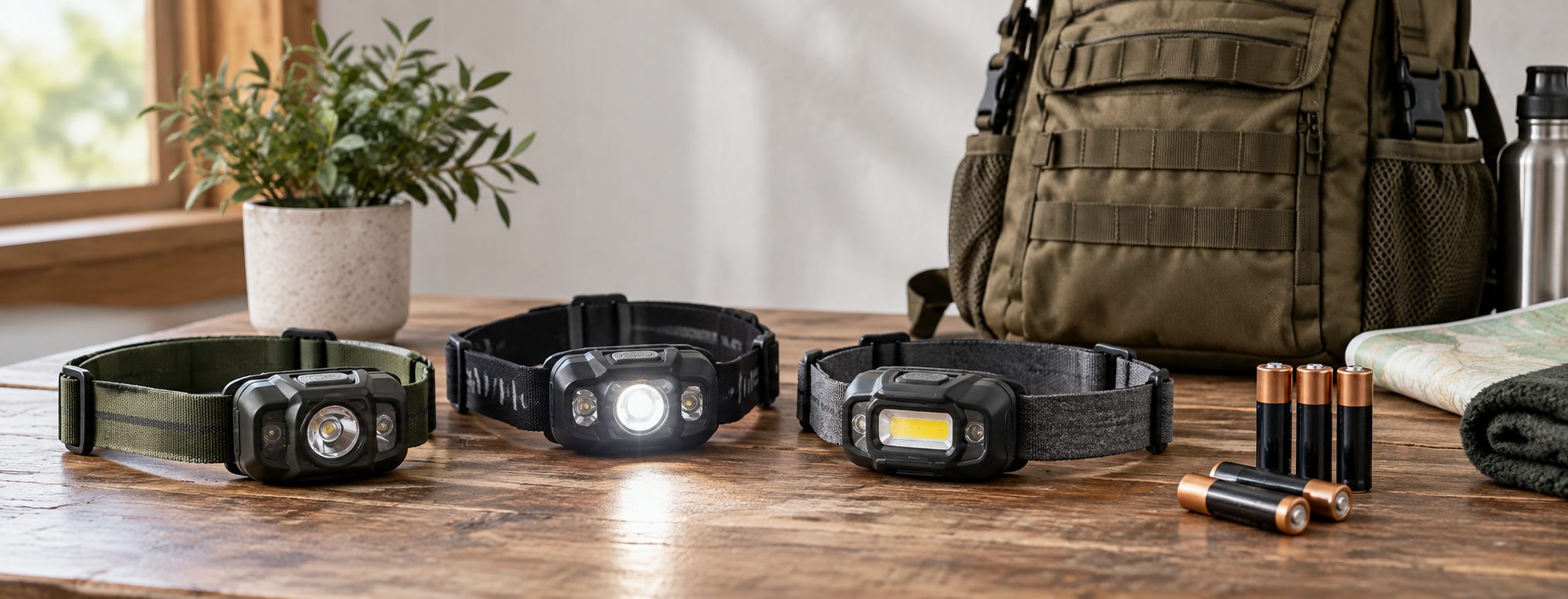
A headlamp does something a handheld flashlight can't: it keeps both hands free while you check a fuse box, change a tire, cook on a camp stove, or carry a child down a dark stairwell. This guide compares an AAA-powered model, a USB-rechargeable model, and a dual-power model that runs on either, on the specs that actually matter in an emergency: usable runtime (not just peak lumens), how easy the controls are to operate by feel in total darkness, comfort for extended wear, and what happens when the battery runs out mid-task.
Quick Picks
| Product | Type | Max Lumens | Power | Price |
|---|---|---|---|---|
| Black Diamond Astro 300 | AAA | 300 lm | 3× AAA | ~$25 |
| Petzl Swift RL | USB-rechargeable | 1,100 lm | USB-C rechargeable | ~$130 |
| Black Diamond Spot 400 | Dual-power | 400 lm | 3× AAA or USB-C | ~$45 |
Best AAA Headlamp
Black Diamond Astro 300: Best Budget AAA Headlamp
For a headlamp that's going to sit in an emergency kit for months or years between uses, replaceable AAA batteries have a real advantage over a built-in rechargeable pack: you're not depending on a battery that could be dead or degraded when you finally need it. The Astro 300 delivers 300 lumens with dimming and strobe modes for about $25, which is enough output for most household emergency tasks without the premium price of a full-featured trail-running headlamp. It's a straightforward, no-frills pick: exactly what an emergency kit needs rather than an everyday-carry upgrade.
- 300 lumens; dimming and strobe modes
- Runs on 3× AAA batteries: no charging required
- Budget-friendly at ~$25
Best USB-Rechargeable Headlamp
Petzl Swift RL: Best Rechargeable for Regular Use
If you'll actually use a headlamp regularly, not just pull it out during outages, a rechargeable model avoids the ongoing cost and waste of disposable batteries. The Swift RL puts out up to 1,100 lumens with Petzl's reactive lighting technology, which automatically adjusts brightness based on ambient light, useful for moving between a dark yard and a lit garage without manually adjusting settings every time. At around $130, it's a genuine premium purchase best justified by frequent use (camping, dog walks, regular power-tool work) rather than as a kit item that sits unused for a year.
- Up to 1,100 lumens; reactive automatic brightness adjustment
- USB-C rechargeable
- Best suited to frequent, regular use rather than kit storage
Best Dual-Power Headlamp
Black Diamond Spot 400: Best Dual-Power Headlamp
A dual-power headlamp solves the tradeoff between the two options above: the Spot 400 runs on 3 AAA batteries out of the box, but accepts a separately-sold rechargeable battery pack too, so a household can standardize on AAA batteries for reliable long-term kit storage while still having the option to run it rechargeable day to day. At 400 lumens with a dedicated red night-vision mode (useful for not fully waking a sleeping household member) and IPX8 waterproofing, it's the headlamp we recommend when a household wants one good option rather than separate AAA and rechargeable units.
- 400 lumens; red night-vision mode; IPX8 waterproof
- Runs on 3× AAA batteries or an optional rechargeable pack
- One headlamp instead of choosing between AAA-only and rechargeable-only
What Actually Matters When Buying One
Usable Runtime, Not Peak Lumens
A headlamp's peak-lumen number is measured on its highest setting, which most models can only sustain for a short time before dropping output or draining the battery. For general household emergency use, 200-400 lumens on a medium setting that lasts several hours is more practically useful than a brief 1,000+ lumen burst. Check a model's runtime at medium or low brightness, not just its maximum rated output, before assuming higher lumens automatically means a better emergency headlamp.
Controls You Can Operate by Feel
During an actual power outage, you're often operating a headlamp in total darkness, which means fumbling with a small multi-function button reading tiny icons isn't realistic. A single large button with a simple press-and-hold pattern for power and a separate press-through for modes is easier to use by feel than a headlamp requiring you to cycle through many settings to reach the one you want.
Comfort for Extended Wear
An emergency isn't always a five-minute task: extended power outages, multi-hour repairs, or overnight evacuations mean a headlamp may be worn for hours at a stretch. A wide, padded headband distributes weight better than a thin strap, and a tilting lamp housing lets you angle the beam down without tilting your whole head, both of which matter more after an hour of continuous wear than they seem to on a five-minute store test.
Standardise Your Battery Type
As covered in our Emergency Flashlights & Lanterns guide, standardising your household's flashlights, headlamps, and radios on one battery type (AA or AAA) means one stockpile of batteries covers everything. If you're building out a kit rather than replacing a single item, an AAA headlamp keeps that stockpile simpler than adding a proprietary rechargeable pack to the mix.
Emergency Headlamp FAQ
Is a headlamp actually better than a flashlight for emergencies?
For any task requiring both hands, yes: checking a fuse box, carrying supplies down stairs, first aid, or cooking on a camp stove all become meaningfully harder while also holding a flashlight. A flashlight still has advantages for signalling at distance or lighting a wide area for a group, so the two are complementary rather than one replacing the other. Most complete emergency kits include both; see our Emergency Flashlights & Lanterns guide for the flashlight and lantern side of that pairing.
Should I buy an AAA headlamp or a rechargeable one for my emergency kit?
For a headlamp that lives in a kit and might not be touched for months, AAA (with lithium batteries, which have a much longer shelf life than alkaline) avoids the risk of a dead rechargeable battery when you need it. For a headlamp you'll use regularly, rechargeable avoids ongoing battery costs. A dual-power model sidesteps the decision entirely by supporting both.
What's the red light mode for on some headlamps?
Red light preserves your eyes' dark adaptation (the ability to see in low light without a bright light resetting it) and is much less likely to fully wake a sleeping family member than white light. It's also commonly used for reading maps at night without ruining night vision, and by hunters and wildlife observers for the same reason. It's a genuinely useful feature for household emergency use, not just a niche outdoor one.