Best Battery-Powered Fans for Power Outages (2026)
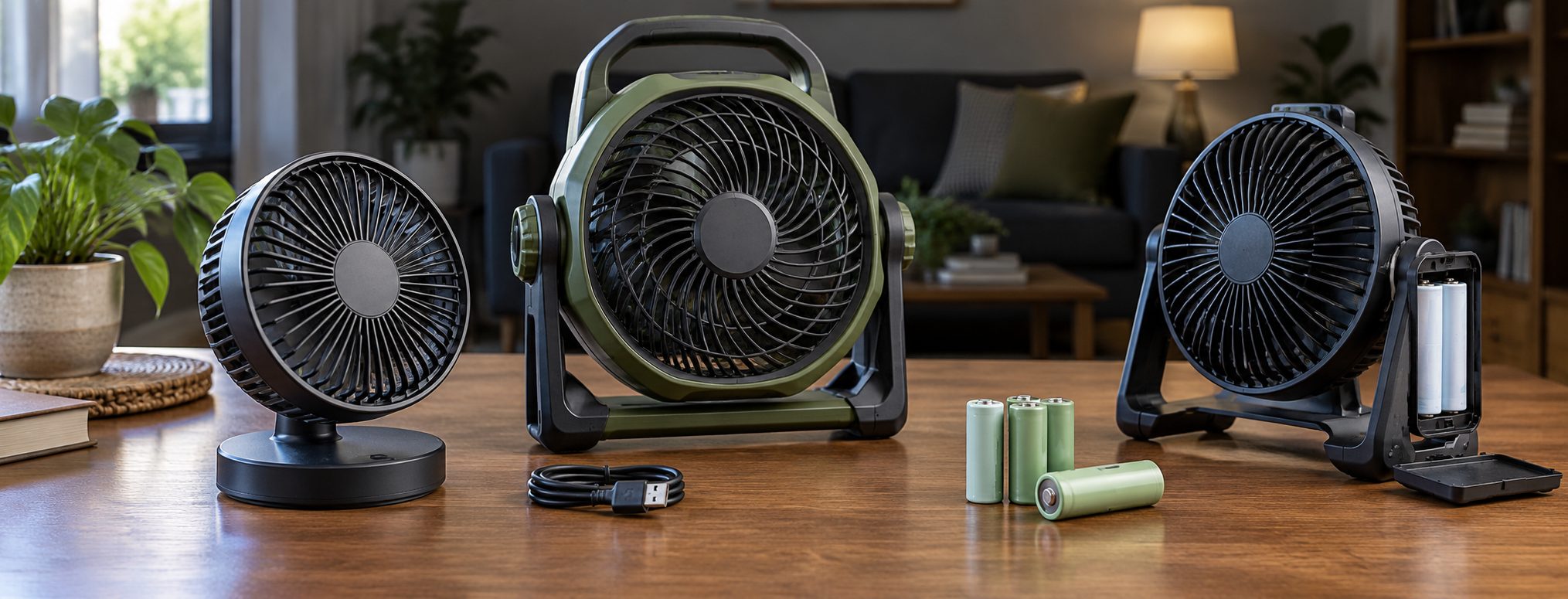
A power outage during summer heat is one of the more dangerous ordinary emergencies a household can face: without air conditioning, indoor temperatures climb fast, and heat-related illness risk rises with them. A battery-powered fan won't replace air conditioning, but it keeps air moving across skin, which is how the body actually loses heat through evaporation. This guide compares three types, replaceable-battery, rechargeable, and hybrid (battery-or-AC) models, on the specs that actually matter during an outage: runtime by speed, what happens when the battery runs out, and whether it's realistic to run one all night.
Quick Picks
| Product | Type | Power Source | Runtime | Price |
|---|---|---|---|---|
| Odoland Camping Fan with LED Lantern | Replaceable-battery | 2× D-cell | Up to 15 hrs (low) / 5 hrs (high) | ~$25 |
| Wavmill 12000mAh Camping Fan | Rechargeable | Detachable 12,000mAh pack | ~11 hrs tested | ~$35 |
| Ryobi 18V ONE+ Hybrid Portable Fan (P3320) | Hybrid | 18V ONE+ battery or AC adapter | Varies by battery Ah; unlimited on AC | ~$89 (kit) |
Best Replaceable-Battery Fan
Odoland Camping Fan with LED Lantern: Best for Long-Term Storage
For an emergency kit that might not get opened for months at a time, a fan that runs on ordinary disposable batteries has one big advantage over any rechargeable model: it can't quietly self-discharge to zero while it sits in a closet. The Odoland combination fan-and-lantern runs on 2 D-cell batteries, which is manufacturer-rated for up to 15 hours of fan use on low speed or 5 hours on high, plus a separate LED lantern function rated around 20 hours on its own. D-cell lithium batteries also have a very long shelf life in storage, so this is a reasonable "buy it, put it in the kit, forget about it for a year" option. The tradeoff versus a rechargeable model is lower peak airflow and the ongoing cost of replacement batteries.
- Runs on 2 D-cell batteries: no charging required, long shelf life in storage
- Combination fan + LED lantern in one unit
- Hanging hook for tent or ceiling mounting
Best Rechargeable Fan
Wavmill 12000mAh Camping Fan: Best Rechargeable Value
Rechargeable fans generally move more air than battery models of similar size, and the Wavmill's detachable 12,000mAh battery pack does double duty as a USB power bank for charging a phone when you don't need the fan running. Independent testing found roughly 11 hours of runtime on a charge, which comfortably covers an overnight outage on a lower speed setting. The obvious tradeoff versus a disposable-battery fan: if the power is out for several days and you have no way to recharge it, this fan eventually goes quiet, so it pairs well with a small solar panel or power bank rather than being a standalone long-duration solution.
- Detachable 12,000mAh battery: also works as a phone power bank
- ~11 hours tested runtime
- 4 speeds, timer function, built-in light
Best Hybrid (Battery + AC) Fan
Ryobi 18V ONE+ Hybrid Portable Fan (P3320): Best for Households That Already Own Ryobi Tools
A true hybrid fan runs on a rechargeable battery when the power is out, and switches to plugging directly into the wall the rest of the time, so you're not relying on a battery that's been sitting unused since the last outage. The Ryobi P3320 runs on the same 18V ONE+ battery platform as Ryobi's drills, saws, and other tools, which is a real advantage if your household already owns that ecosystem: any charged Ryobi battery becomes fan runtime, and runtime scales with whichever battery (2.0Ah to 4.0Ah and up) you have on hand. If you don't already own 18V ONE+ batteries, a fan-specific rechargeable model like the Wavmill above is the simpler, cheaper choice.
- Runs on Ryobi 18V ONE+ batteries (shared with other Ryobi tools) or AC power
- Runtime scales with battery size; unlimited runtime when plugged in
- Best value if you already own Ryobi ONE+ batteries and chargers
What Actually Matters When Buying One
Runtime at the Speed You'll Actually Use
Manufacturer-listed maximum runtime is almost always measured on the lowest speed setting, which moves the least air. If a listing advertises "58 hours," check whether that's the low-speed figure before assuming it'll run all night on a setting strong enough to actually feel. Independent reviews that test runtime on a mid or high setting are more useful than a single headline number from the manufacturer.
Battery Standardisation
If your household already stockpiles a specific battery type for flashlights or radios (see our Emergency Flashlights & Lanterns guide on why we recommend standardising on one battery type), a fan that uses the same battery reduces the number of different cells you need to keep charged or stocked. A D-cell or AA-powered fan fits into an existing battery stockpile; a proprietary rechargeable pack does not.
Overnight and Bedroom Use
Manufacturers rarely publish an independently verified decibel rating for these fans, so treat "quiet" marketing claims with some skepticism and check recent buyer reviews on the specific listing for noise complaints before assuming a model is bedroom-appropriate. A fan with a simple 2-4 speed dial, rather than one speed only, at least lets you drop to the quietest setting overnight.
Airflow Versus Battery Life Is a Real Tradeoff
Every fan on this page loses runtime as you increase speed, often dramatically: a fan rated for 50+ hours on low may run 5 hours or less on high. Size your expectations around the speed you'll realistically want during a hot night, not the number on the box.
Battery-Powered Fan FAQ
Will a battery-powered fan actually cool down a room during a power outage?
No: a fan doesn't lower air temperature the way air conditioning does, it moves air across your skin so sweat evaporates faster, which is how your body loses heat. That still meaningfully reduces heat stress and helps you sleep in a hot house. For genuinely dangerous heat during an extended outage, moving to an air-conditioned public space (library, mall, official cooling center) is safer than relying on a fan alone: see our Extreme Heat Survival Guide for when that line gets crossed.
Replaceable batteries, rechargeable, or hybrid: which should I actually buy?
If the fan needs to work reliably after sitting unused in a kit for months, a replaceable-battery model removes the risk of finding a dead battery when you need it. If you'll use the fan regularly (camping, everyday use, not just emergencies) and can recharge it between uses, a rechargeable model gives more airflow per dollar. A hybrid model is worth the higher price mainly if you already own compatible batteries from the same tool platform (Ryobi, DeWalt, etc.), since new compatible batteries are a real added cost otherwise.
How many fans does a household actually need for a power outage?
One per occupied bedroom is a reasonable baseline, since that's where overnight heat risk is highest, plus one for whatever common room the household gathers in during the day. There's no need to replace every household fan with a battery-powered version: the goal is enough battery-powered coverage to get through the hours when the grid is down, not a complete backup fan for every room.