Emergency Supplies for a Power Outage: Build Your Survival Kit
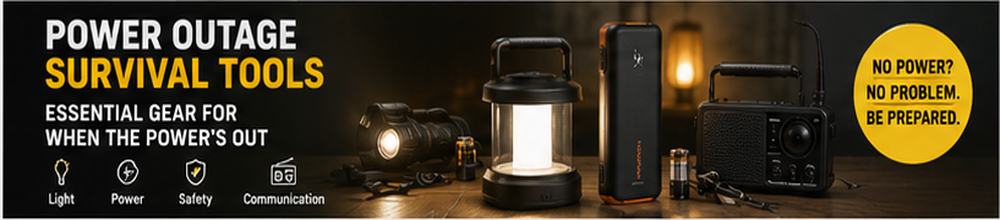
A power outage survival kit is different from a standard emergency kit in one critical way: the threats are slower and more insidious. Unlike a hurricane or earthquake where danger is immediate, a blackout emergency slowly degrades your situation - food spoils over hours, homes become dangerously cold or hot, payment systems go offline, and medical devices stop working. The right emergency kit for a power outage addresses all of these failure points before they become crises.
This guide covers the 9 non-negotiable categories every power outage kit must address, the best pre-made kits, how to choose backup power for your situation, and a printable checklist to audit what you already have.
Why a Power Outage Kit Is Different from a Bug Out Bag
A bug out bag is built for leaving. A blackout emergency kit is built for staying - potentially for days - while your home's normal systems fail around you. The specific problems a power outage creates that other emergency kits don't fully address:
- Food spoilage: your refrigerator becomes a liability after 4 hours, and your freezer after 48 hours, unless you have a plan
- No heat or cooling: in winter, indoor temperatures can drop dangerously within hours without electricity; in summer, heat-related illness becomes a risk within a day
- Payment systems down: card readers, ATMs, and digital wallets all require power and internet - cash becomes the only currency that works
- Medical device failure: CPAP machines, nebulizers, powered wheelchairs, and home oxygen concentrators all require electricity
- Communication blackout: cell towers run on backup power for 4–8 hours; after that, data networks degrade or fail
- Sewage and water pressure: municipal water systems use electric pumps; pressure drops in extended outages in many areas
The 9 Essentials for a Power Outage Survival Kit
1. Light
- LED headlamp (1 per person): hands-free light for navigating at night, cooking, and reading; headlamps are dramatically more practical than flashlights in an outage
- LED lantern: illuminates a whole room; place one per floor. Battery-powered or rechargeable.
- Extra batteries (AA and AAA in bulk): most outage lighting runs on AA or AAA; buy a 48-pack and store half in your kit
- Candles + matches: backup to battery lighting; never leave unattended
- Glow sticks (10+): safe light for children; no fire risk, no battery drain
2. Power Banks & Charging
- High-capacity power bank (26,800+ mAh): charges a smartphone 6–8 times; the single most-used item in any outage lasting more than a few hours
- Keep power banks fully charged at all times: a power bank at 20% charge is useless when the grid goes down
- USB-C and Lightning cables (2 of each): one set for your kit, one for daily use
- 12V car charger: charge devices from your vehicle if the outage extends beyond your power bank capacity
3. Emergency Radio
- NOAA hand-crank weather radio (Midland ER310 or similar): the most important single item in any power outage kit. Receives NOAA alerts, runs on hand crank or solar when batteries die, and charges your phone via USB. When internet and cell networks are down, this is your only link to emergency information.
- Battery-powered AM/FM radio: local radio stations broadcast emergency updates and shelter-in-place instructions during extended outages
4. Water
- Stored water - 1 gallon per person per day, 3-day minimum: municipal water systems rely on electric pumps; pressure drops in extended outages in many areas
- Water purification tablets: if stored water runs out
- LifeStraw or Sawyer filter: backup if tap water becomes unsafe
- Fill bathtubs immediately when an outage warning is issued: gravity-fed water for flushing and cleaning
5. Shelf-Stable Food
- 3-day minimum food supply requiring no cooking or refrigeration: canned goods with a manual opener, peanut butter, crackers, trail mix, granola bars, and dried fruit
- Camp stove + fuel canisters (use outdoors only): never use propane or camp stoves indoors - carbon monoxide poisoning is a real and frequent outage fatality
- Manual can opener: electric openers are useless without power
- Paper plates and disposable utensils: conserve water by not washing dishes
6. Warmth
- Mylar emergency blankets (1 per person): retain 90% of body heat; essential in winter outages
- Sleeping bags rated below your expected low temperature: in a cold-climate winter outage, sleeping bags are the difference between discomfort and hypothermia
- Extra blankets and warm clothing: layer up rather than relying on supplemental heat sources that have carbon monoxide risks
- Safe portable heater (propane-free): electric space heaters are useless in an outage; if using any fuel-burning heater, it must be used outdoors or in a well-ventilated space with a CO detector
- Battery-powered CO detector: CO poisoning from improper generator and heater use kills dozens of Americans every power outage event
7. Sanitation
- Hand sanitizer (large bottle): water pressure may drop; maintain hygiene without running water
- Baby wipes / wet wipes (large pack): body cleaning, surface cleaning, and toilet paper backup
- Garbage bags (heavy duty, 30+): waste management if sewage systems back up
- Portable camping toilet (optional): for extended outages where plumbing is compromised
- Toilet paper (2-week supply): stock up before storms; stores sell out immediately when outage warnings are issued
8. Cash
- $200 minimum in small bills ($5s, $10s, $20s): card readers require power and internet connectivity; ATMs run on backup power for a few hours and then go offline. Cash is the only currency that works in a prolonged blackout.
- Store cash in your kit, not just your wallet: your wallet is with you when you're out; your kit is what you have when the power goes out at home
9. Medications & Medical
- 7-day supply of all prescription medications: pharmacies lose the ability to process prescriptions in extended outages; their computer systems go down
- Backup battery or hand-powered medical devices: CPAP machines, nebulizers, hearing aids, and insulin pumps all require power; plan specifically for each device you depend on
- Insulin storage plan: insulin must remain refrigerated. Keep a medical-grade cooler and ice packs. Contact your doctor before an emergency about how long your specific insulin remains viable at room temperature.
- First aid kit (100-piece minimum): injuries are more common during outages - darkness, candles, and makeshift cooking create hazards
- OTC medications: pain reliever, antidiarrheal, antihistamine
Best Pre-Made Power Outage Kits
Midland ER310 Emergency Crank Weather Radio
If you only buy one item for a power outage kit, this is it. NOAA all-hazards weather radio, hand crank + solar + battery power, USB phone charging port, and an SOS beacon. Costs $50. Midland makes the most reliable hand-crank emergency radios on the market, and the ER310 is their best mid-range model.
- NOAA Weather Alert Radio across all 7 channels
- Hand crank + solar + AA batteries - never dies
- USB-A phone charging port
Anker 737 Power Bank (26,800 mAh)
The best high-capacity power bank for a power outage kit. 26,800 mAh charges a modern smartphone 6–7 times. Dual USB-C with 140W output charges laptops too. Compact enough to keep in a bag or on a shelf. Anker is the gold standard for reliability in power banks - this is not a place to buy cheap.
- 26,800 mAh - 6 to 7 full phone charges
- 140W USB-C output: charges laptops and tablets
- Anker reliability - best in class
BioLite AlpenGlow 500 Lantern
Rechargeable LED lantern that puts out 500 lumens - enough to light a small room clearly. Dimmable, runs 150+ hours on low, charges via USB-C, and has a built-in power bank for phone charging. More practical than candles, safer, and far brighter than battery lanterns. One per floor of your home.
- 500 lumens - lights an entire room
- 150+ hours on low, USB-C rechargeable
- Built-in power bank: also charges your phone
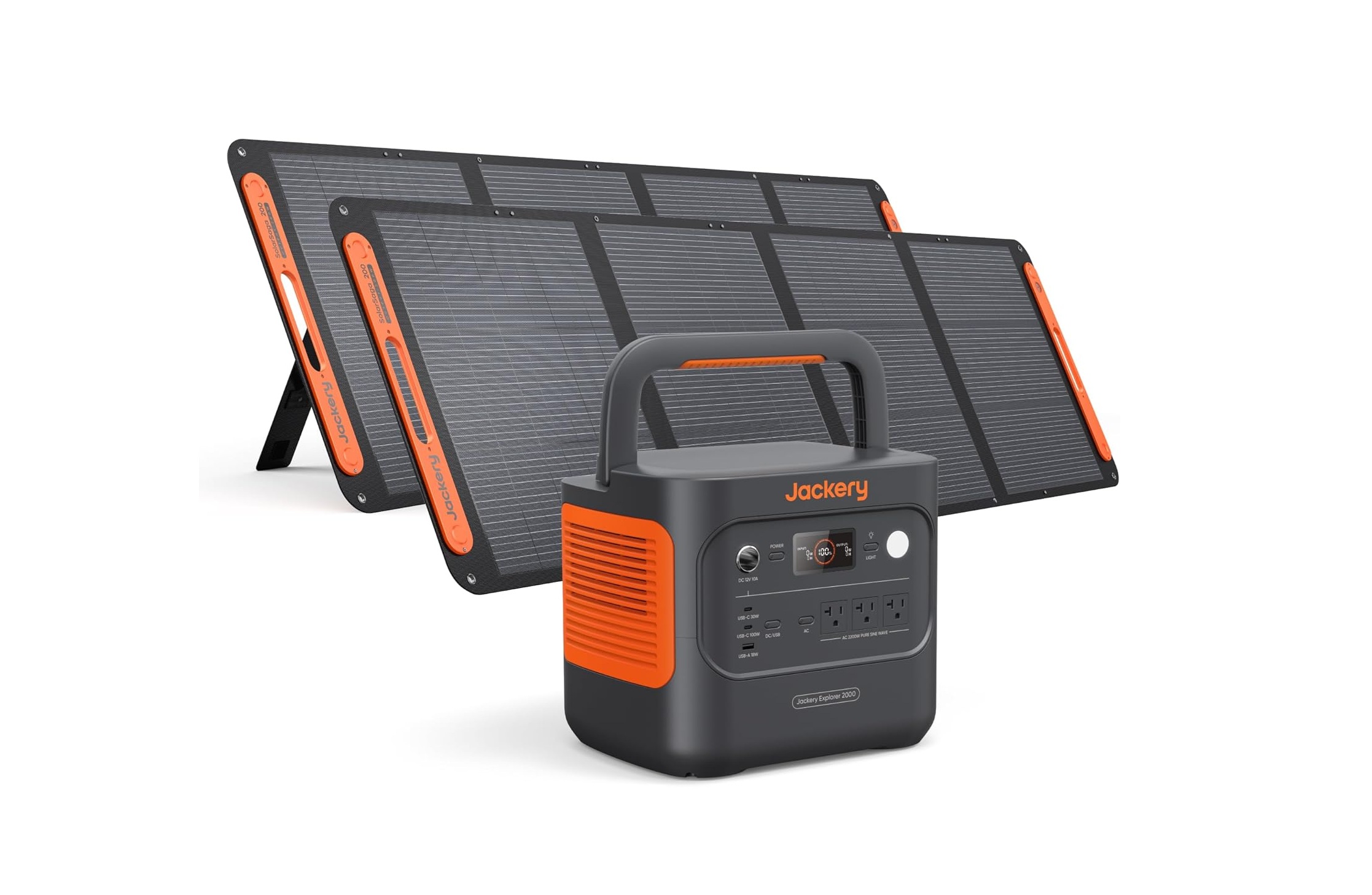
Jackery Explorer 300 Plus Portable Power Station
The best entry-level power station for powering devices during a multi-day outage. 288Wh capacity runs a CPAP machine for a full night, charges 20+ phones, or powers a mini-fridge for several hours. Charge via solar panel, car outlet, or wall outlet. The step up from a power bank when you have larger power needs.
- 288Wh - powers CPAP machines, laptops, and small appliances
- Multiple AC, USB-A, USB-C, and DC outputs
- Solar-compatible: charge indefinitely off-grid
Backup Power Tiers: What to Buy and Why
Not all backup power is the same. The right tier depends on how long your outages typically last and what you need to power.
| Tier | Product Type | Best For | Cost |
|---|---|---|---|
| 1 | Power bank (10,000–26,800 mAh) | Phones, tablets, small devices | $30–$90 |
| 2 | Portable power station (200–1,000 Wh) | CPAP, laptops, mini-fridge, fans | $200–$700 |
| 3 | Solar generator system (1,000+ Wh + panels) | Extended outages, full household essentials | $700–$2,500 |
| 4 | Standby gas/propane generator | Whole-house backup; medical equipment | $800–$5,000+ |
See our in-depth guides: Best Solar Generators · Best Solar Power Banks · Portable Generator Guide
Winter vs Summer Power Outage Kits
Winter Outage Add-Ons
- Sleeping bags rated to 0°F or below: home temperatures can drop 1–2°F per hour without heat
- Chemical hand warmers (24+ pairs): each lasts 8–12 hours; use in sleeping bags and gloves
- Wool blankets (1 per person): wool retains warmth even when damp; superior to cotton in cold environments
- Pipe insulation and know where your shut-off valve is: burst pipes are the most expensive consequence of winter outages
- Battery-powered CO detector: critical if you use any backup heat source; CO poisoning from generators and heaters kills every year
Summer Outage Add-Ons
- Battery-powered fans: airflow prevents heat-related illness in indoor temperatures above 90°F
- Cooling towels and spray bottles: evaporative cooling without power
- Ice and coolers: block ice keeps a good cooler cold for 48–72 hours; protect medications and insulin
- Know your nearest cooling center: libraries, community centers, and malls open as cooling centers during heat emergencies; heat kills more Americans than any other weather event
- Electrolyte packets: prevent dehydration in extreme heat when you're conserving water
Food Safety During a Power Outage
Understanding food safety timelines prevents the most common and avoidable outage health risk - foodborne illness from eating spoiled food.
| Food Storage | Safe Without Power | Key Rule |
|---|---|---|
| Refrigerator | 4 hours (door closed) | Discard meat, dairy, eggs if over 40°F for 2+ hours |
| Freezer (half full) | 24 hours | Keep door closed; do not open |
| Freezer (full) | 48 hours | Full freezers stay cold longer due to thermal mass |
Rule of thumb: "When in doubt, throw it out." Foodborne illness during an emergency when medical care may be unavailable is a serious risk. See the USDA's full food safety during power outage guide.
Power Outage Survival Kit Checklist
- LED headlamp (1 per person) + extra batteries
- LED lantern (1 per floor)
- High-capacity power bank (26,800+ mAh), fully charged
- USB-C and Lightning charging cables
- NOAA hand-crank weather radio
- Water (1 gallon per person per day, 3-day minimum)
- Water purification tablets or filter
- 3-day shelf-stable food supply (no cooking required)
- Manual can opener
- Camp stove + fuel (outdoor use only)
- Mylar emergency blankets (1 per person)
- Sleeping bags or warm blankets
- Battery-powered CO detector
- Hand sanitizer
- Baby wipes / wet wipes
- Garbage bags (heavy duty)
- Cash ($200+ in small bills)
- 7-day prescription medication supply
- Backup power for medical devices
- First aid kit (100+ piece)
- Backup power station (if you have power-dependent medical equipment)
- Paper plates and disposable utensils
- Printed emergency contacts and local shelter locations
Power Outage Survival Kit FAQ
How long should a power outage kit last?
Build for a minimum of 72 hours (3 days), which covers the vast majority of power outage events. FEMA recommends 72 hours as the baseline. If you live in an area prone to extended outages - ice storms, hurricanes, major grid events - build toward a 7-day to 2-week kit. The incremental cost between a 3-day and 7-day kit is small; mostly additional food and water.
Can I run a generator indoors during a power outage?
Never. Gasoline and propane generators produce carbon monoxide, an odorless, colorless gas that kills within minutes in enclosed spaces. Generators must be operated at least 20 feet from any window, door, or vent, outdoors only. Carbon monoxide poisoning from indoor generator use is the leading cause of non-fire deaths following major storms. Install a battery-powered CO detector in your home as a separate safeguard.
What's the difference between a power bank and a portable power station?
A power bank charges phones and small electronics via USB. A portable power station has AC outlets and can power larger devices - laptops, CPAP machines, small fans, and mini-fridges. Power banks cost $30–$90 and are a must-have for everyone. Portable power stations cost $200–$700 and are worth it if you have medical devices or want to run appliances. They're not mutually exclusive - many households have both.
How do I keep insulin safe during a power outage?
Contact your doctor or pharmacist before an emergency to ask specifically how long your insulin type remains viable at room temperature - it varies by formulation. As a general guideline, most insulin is stable at room temperature (below 77°F) for 28 days. Keep a medical-grade cooler with ice packs to extend refrigerated storage. The American Diabetes Association recommends registering with your utility as a medical baseline customer to prioritize power restoration to your address.
What should I do with refrigerator food during an extended outage?
Keep refrigerator and freezer doors closed as much as possible to preserve cold. Use a food thermometer to check temperature if uncertain - discard any refrigerator food that has been above 40°F for more than 2 hours. Move priority items (medications, baby formula, insulin) to a cooler with ice. Eat refrigerator food before freezer food. Freeze water bottles in advance and use them to extend freezer life during outages.
What is a blackout survival kit and how is it different from a general emergency kit?
A blackout survival kit (also called a power outage kit or blackout emergency kit) is a general emergency kit specifically optimised for the failure points of a grid-down scenario: lighting, charging, food safety, and medical devices that require electricity. Where a general emergency kit focuses on water, food, and first aid, a blackout survival kit layers in high-capacity power banks, a portable power station, a hand-crank radio, CO detectors, and a plan for electricity-dependent medical needs. Think of it as a standard emergency kit with a dedicated power layer added on top.