Best Dry Bags for Emergency Go Bags and Flood Evacuation (2026)
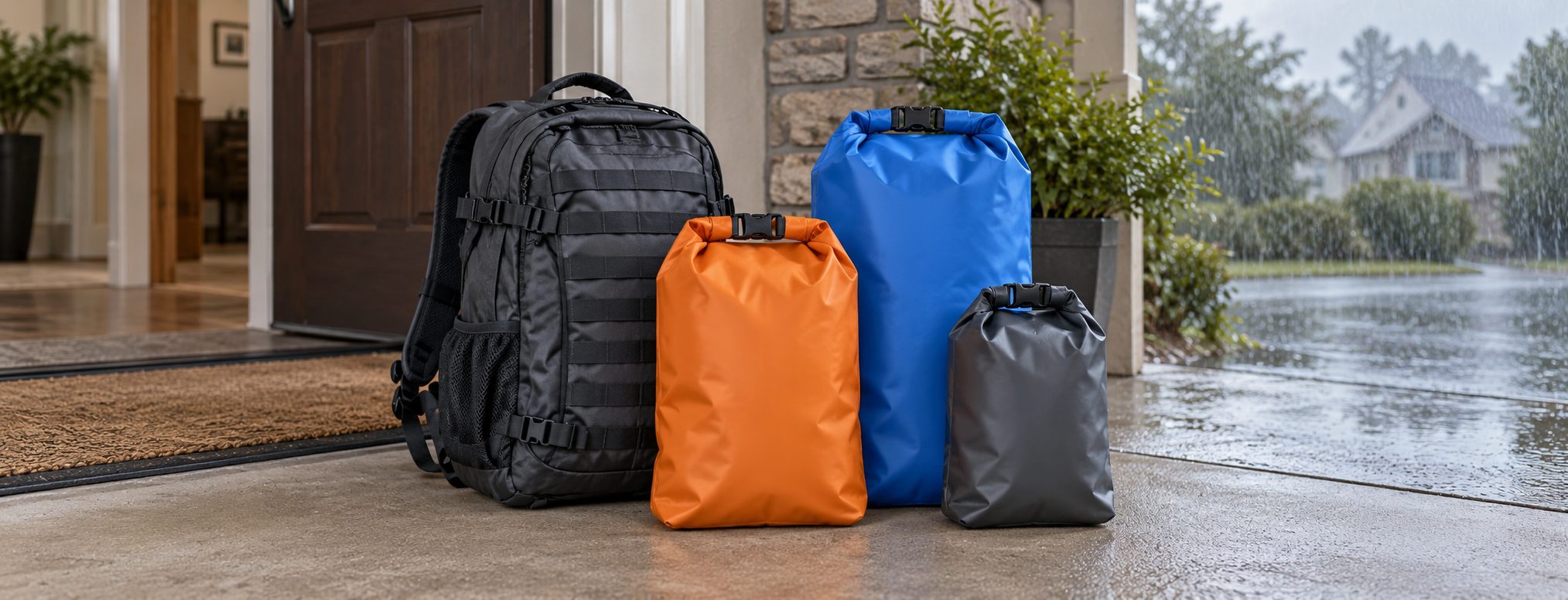
Most bug-out bags and backpacks are water-resistant at best, not waterproof, which becomes a real problem the moment you're evacuating through rain or floodwater. A dedicated dry bag solves this without replacing your whole pack. This guide compares a roll-top dry bag (for individual gear), a pack liner (protecting everything inside an existing backpack at once), and a fully waterproof backpack (built waterproof from the start), on how much actually fits at each size, closure quality, carrying comfort, and the manufacturer-stated immersion limits: dry bags are rated for rain and dunking, not indefinite submersion.
Quick Picks
| Product | Type | Capacity | Price |
|---|---|---|---|
| Sea to Summit Ultra-Sil Dry Bag | Roll-top dry bag | Multiple sizes, 1L–35L+ | ~$20–$35 |
| Sea to Summit Ultra-Sil Pack Liner | Backpack liner | 50L / 70L / 90L | ~$25–$35 |
| Sea to Summit Big River Dry Backpack | Waterproof backpack | 5L–65L | ~$150–$220 |
Best Roll-Top Dry Bag
Sea to Summit Ultra-Sil Dry Bag: Best for Individual Gear
This is the simplest, most flexible way to waterproof specific items inside a bag that isn't otherwise waterproof: documents, electronics, a change of clothes, or a sleeping bag each go in their own sealed roll-top bag, so a single failure or a pack that gets soaked from outside doesn't compromise everything at once. The silicone-coated nylon is genuinely lightweight (a 20L bag weighs about 2 oz) without sacrificing the roll-top seal's water resistance, and it comes in enough sizes to organise a full go-bag by category (documents in a small one, clothing in a larger one). Rated for rain, splashing, and brief dunking, not sustained submersion.
- Available in many sizes: organise a go-bag by category, not just one big bag
- Very lightweight silicone-coated nylon (a 20L bag is about 2 oz)
- Rated for rain and brief dunking, not sustained submersion
Best Backpack Liner
Sea to Summit Ultra-Sil Pack Liner: Best for Protecting an Existing Backpack's Entire Contents
If you already own a bug-out bag or backpack you're happy with, a pack liner waterproofs everything inside it at once for a fraction of the cost of replacing the whole bag with a waterproof model. It's essentially a large roll-top dry bag shaped to fit inside a backpack's main compartment, sized in 50L, 70L, and 90L to match common pack volumes. The tradeoff versus individual dry bags: everything shares one liner, so a failure or an item that needs quick separate access (like documents you want without unpacking everything) is less convenient than the individually-bagged roll-top approach above.
- Waterproofs an entire existing backpack's contents in one liner
- Sized to match common pack volumes (50L/70L/90L)
- Cheaper than replacing your bag with a fully waterproof model
Best Waterproof Backpack
Sea to Summit Big River Dry Backpack: Best Purpose-Built Waterproof Pack
Rather than adding waterproofing to a regular backpack, the Big River is built waterproof from the ground up: a roll-top main compartment combined with an actual backpack harness and hip belt, sized from 5L up to 65L depending on how much you need to carry. This is the right choice if you're specifically prioritising water protection for a flood-evacuation or watercraft-adjacent bug-out scenario over the organisational pockets and compartments a normal backpack offers; roll-top dry-bag-style packs are generally less compartmentalised than a standard hiking backpack, which is the real tradeoff for the added water protection.
- Purpose-built waterproof roll-top main compartment with a real backpack harness
- Available from 5L to 65L to match different needs
- Fewer organisational compartments than a standard backpack: the tradeoff for water protection
What Actually Matters When Buying One
Roll-Top Seals Need to Be Closed Correctly to Work
A roll-top dry bag's waterproofing depends entirely on rolling the top down enough times (generally three full rolls minimum) before buckling it; an under-rolled closure defeats the design regardless of how good the fabric itself is. Practice sealing your dry bags correctly before you need them under stress, not for the first time during an actual evacuation.
None of These Are Rated for Indefinite Submersion
"Waterproof" on a dry bag's marketing generally means rain, splashing, and brief dunking, not being left underwater for hours. If you're specifically planning for flood evacuation through standing water, treat these as protecting contents from getting wet during transport and short immersion, not as a guarantee against a fully submerged bag over an extended period. See our Flood Survival Kit guide for the broader flood-specific evacuation planning.
Match the Solution to What You Already Own
If you don't yet own a bug-out bag, a purpose-built waterproof backpack is the simplest single purchase. If you already have a bag you like, a pack liner or a set of individual roll-top dry bags gets you most of the water protection at a fraction of the cost of replacing it. There's no need to buy all three types: pick the one that matches your starting point.
Dry Bag FAQ
Can a dry bag survive being fully submerged in floodwater?
Most roll-top dry bags are rated for rain, splashing, and brief dunking rather than extended full submersion, so treat "waterproof" claims with that limitation in mind. For genuine extended-submersion protection of specific critical items (documents, electronics), a rigid waterproof case with a certified depth/time rating is a better fit than a soft dry bag; see our Best Waterproof Document Bags guide for that category specifically.
Do I need a pack liner if my backpack already claims to be water-resistant?
"Water-resistant" backpack fabric slows water penetration during light rain but is not a waterproof guarantee, especially at stitched seams and zippers, which are the actual weak points in almost every backpack. If keeping the contents genuinely dry matters (during flood evacuation, for example), a liner or individual dry bags inside a water-resistant pack is a meaningfully more reliable combination than the pack's fabric alone.
What should I actually put in a dry bag versus just packing normally?
Prioritise anything water damage would ruin or that you can't easily replace: electronics, documents, a change of dry clothes, and any food not already in sealed cans or pouches. Items already reasonably water-tolerant (a metal water bottle, most hard-shell gear) don't need the same protection, so dry bags are often best used selectively rather than trying to waterproof literally everything in a pack.