Best Battery-Powered Water Leak Detectors for Basements (2026)
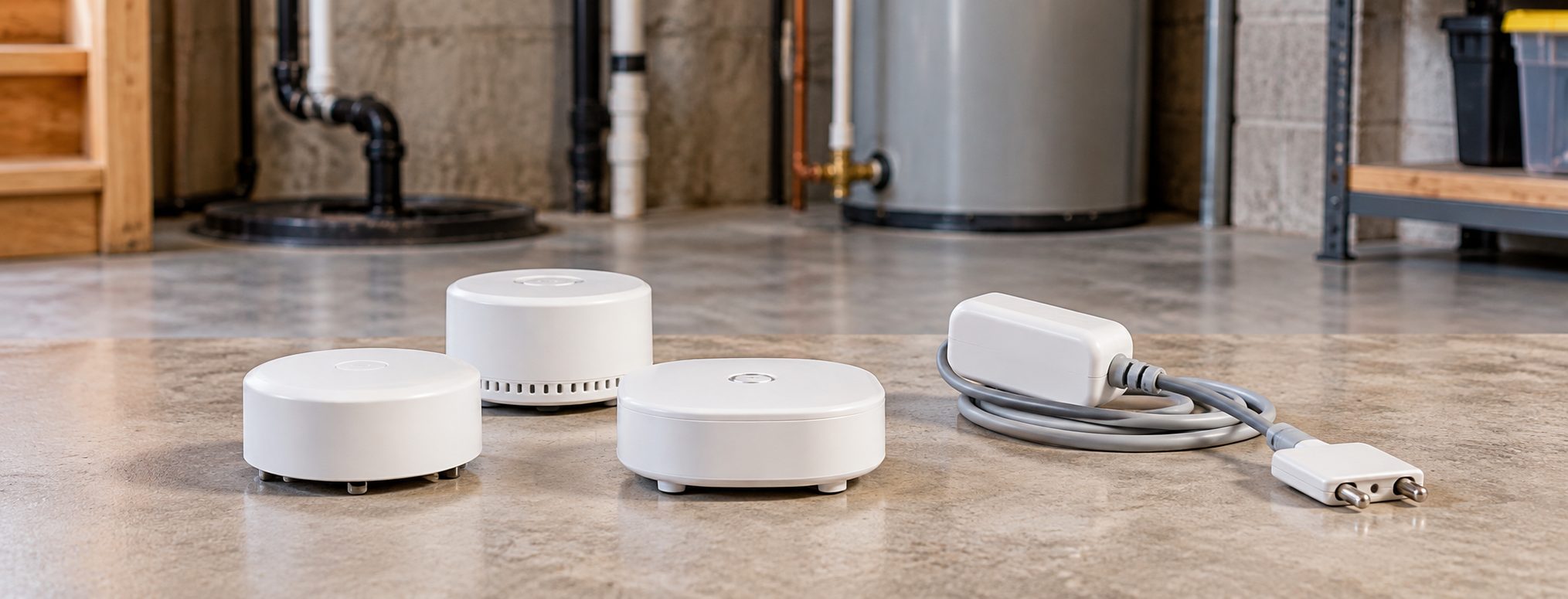
A slow basement leak, a failing water heater, or a sump pump that quietly stops working can cause thousands of dollars in damage days before anyone notices, especially in a space people don't check daily. A battery-powered water leak detector closes that gap for $15-40 per sensor. This guide compares a standalone audible alarm (no app or hub required), a connected sensor (alerts your phone even when you're not home), and a probe/extension-cable detector (for reaching tight spots like behind a water heater), on operation without Wi-Fi, how loud and noticeable the alarm actually is, battery replacement, and what each type depends on to actually notify you.
A leak detector is a detection tool, not a prevention or repair tool: it's a complement to, not a replacement for, checking your sump pump and basement for signs of flooding after storms. See our Flood Survival Kit guide for the broader flood-preparedness picture.
Quick Picks
| Product | Type | Needs Wi-Fi/Hub? | Price |
|---|---|---|---|
| Zircon Leak Alert (1-Pack) | Standalone audible | No | ~$15–$20 |
| YoLink Water Leak Sensor | Connected (LoRa + hub/app) | Yes, with YoLink hub | ~$25–$35 per sensor |
| Abode Water Leak Sensor + Extension Cable | Probe / extension-cable | Optional (works standalone or connected) | ~$30 |
Best Standalone Audible Alarm
Zircon Leak Alert: Best No-Frills Standalone Alarm
Not every leak-prone spot needs a smart, app-connected sensor: sometimes a loud, reliable local alarm is exactly what's needed, and it's the option with the least that can go wrong. The Zircon Leak Alert is a fully self-contained, battery-powered unit with metal contacts on its base: when water touches both contacts, it sounds a loud local alarm immediately, no Wi-Fi, no hub, no app, no subscription. Its obvious limitation is right there in the design: it only helps if someone is home and close enough to hear it, which is why it's best suited to basements and utility rooms people pass through regularly, not vacation homes or areas you're rarely near.
- Fully standalone: no Wi-Fi, hub, app, or subscription required
- Loud local alarm triggered by direct water contact
- Only useful if someone is home and within earshot
Best Connected Sensor
YoLink Water Leak Sensor: Best Connected Sensor for Remote Alerts
A standalone alarm is useless if you're not home to hear it, which is the exact gap a connected sensor closes: the YoLink sensor pairs with a small hub that sends a phone notification the moment water is detected, whether you're at work, asleep upstairs, or away for the weekend. It uses YoLink's own LoRa wireless protocol rather than Wi-Fi directly, which gives it a genuinely long range (rated to 125 feet through typical home construction) and a battery life rated for 2-5 years, both meaningful advantages over standard Wi-Fi sensors that need to be within router range and often have shorter battery life. It does require the YoLink hub (sold separately or in a starter kit) to get the remote alerts; without the hub it still sounds a local 105dB alarm.
- Sends a phone alert via the YoLink hub, wherever you are
- 125 ft LoRa range: reaches basements and remote areas Wi-Fi sensors struggle with
- 2-5 year battery life; 105dB local alarm even without the hub connected
Best Probe / Extension-Cable Detector
Abode Water Leak Sensor with Extension Cable: Best for Hard-to-Reach Spots
The most damaging leaks often happen in places a standalone sensor can't physically sit: directly behind a water heater against a wall, underneath a washing machine, or inside a narrow crawlspace. The Abode sensor pairs with an optional extension cable (up to 15 feet) that lets the sensing probe reach into that tight or hidden spot while the actual alarm unit sits somewhere accessible for battery changes and audibility. This solves a real placement problem the standalone and basic connected sensors above don't address directly, at a modest added cost for the cable itself.
- Optional extension cable (up to 15 ft) reaches tight spots behind appliances
- Sensing probe separate from the main alarm/battery unit
- Works standalone or with connected smart-home alerts
What Actually Matters When Buying One
Leak Detection Is Not Flood Prediction
These devices tell you water is present at the exact spot the sensor sits, the moment it arrives there; they don't predict a storm-driven flood before it happens or protect areas without a sensor placed in them. For advance flood warning, that's a matter of monitoring weather alerts and local flood risk, covered in our Flood Survival Kit guide, not something a leak sensor provides.
Placement Matters More Than Brand
A sensor sitting in the middle of an open basement floor won't catch a slow leak starting at the base of a water heater in the corner. Place sensors at the specific failure points that actually cause water damage: water heater base, washing machine hose connections, sump pump area, and any spot with a history of dampness, rather than one sensor in a general "basement" location and assuming that's sufficient coverage.
Decide Whether You Need Remote Alerts
If someone is reliably home and near the sensor location often enough to hear a local alarm, a standalone unit is simpler, cheaper, and has nothing that can lose connectivity. If the space is checked infrequently, or you want to know about a leak while away from home, the added cost and setup of a connected sensor is genuinely worth it: a leak caught on day one does dramatically less damage than one discovered a week later.
Water Leak Detector FAQ
Do I need a hub or Wi-Fi for these to work at all?
No: a standalone unit like the Zircon Leak Alert works entirely on its own with just batteries and sounds a local alarm with no hub or network of any kind. A hub or Wi-Fi connection is only required for the remote phone-notification feature that connected sensors offer; without it, most connected sensors still function as a local audible alarm, just without the remote alert capability.
How many sensors do I actually need for a basement?
One per genuine failure-point risk area rather than one per room: water heater, washing machine connections, sump pump area, and any spot with a history of past dampness or leaks are the priorities. A large open basement with no specific known risk area might reasonably need just one or two placed at the lowest points where water would naturally pool first.
How long do the batteries actually last?
It varies by model and technology: standard standalone alarms often need battery replacement checks every 6-12 months (worth pairing with your other seasonal home checks), while LoRa-based connected sensors like YoLink are rated for 2-5 years due to their more power-efficient wireless protocol. Check the specific product's rated battery life and test the alarm function periodically regardless of the rated lifespan.