Best Emergency Bivy Sacks for Bug-Out Bags (2026)
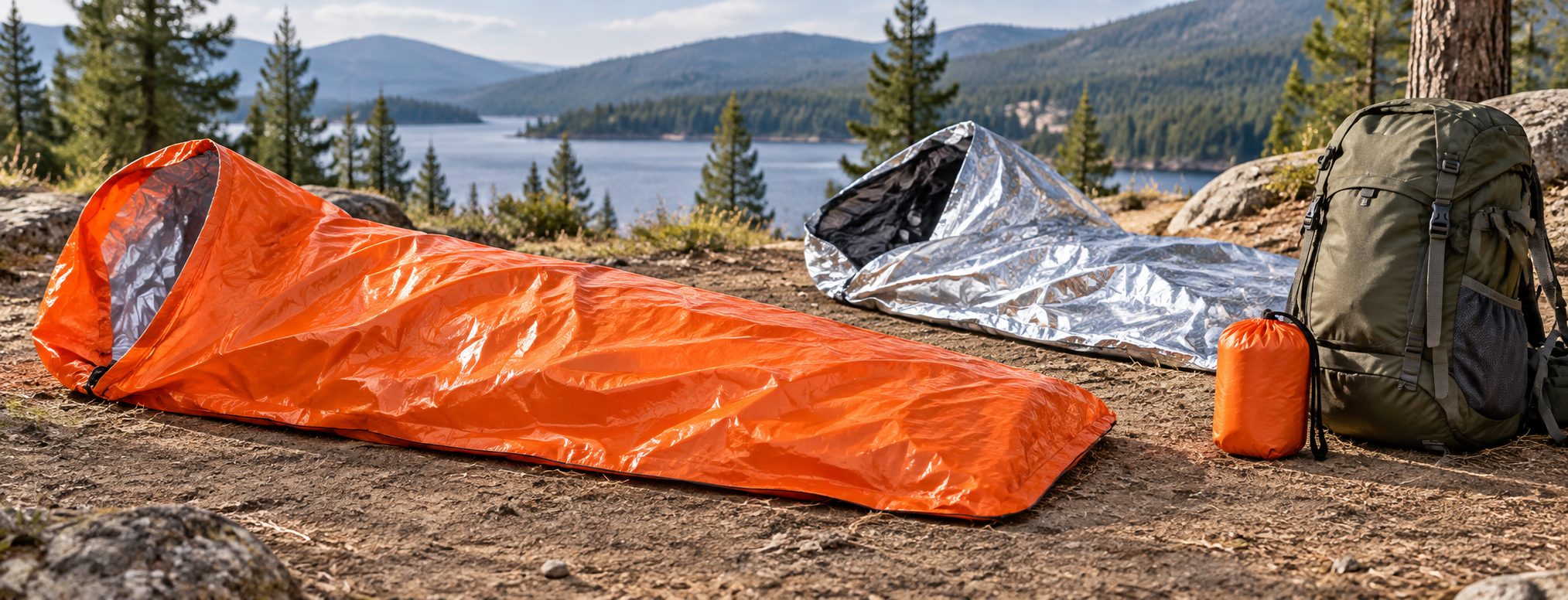
An emergency bivy sack is not the same thing as a sleeping bag: it's a lightweight, packable shelter that traps body heat and blocks wind and rain, meant to prevent hypothermia when you're stranded, injured, or evacuating without full camping gear. This guide compares a disposable-style reflective bivy, a reusable breathable model, and a compact weather-resistant option, on packed size, durability across uses, condensation (a real problem with cheaper reflective models), and how each actually differs from just packing a sleeping bag.
Quick Picks
| Product | Type | Weight | Reusable? | Price |
|---|---|---|---|---|
| SOL Emergency Bivvy | Reflective | 3.8 oz | Several careful uses, not indefinite | ~$18 |
| SOL Escape Bivvy | Reusable/breathable | ~8.5 oz | Yes, fully reusable | ~$45 |
| AquaQuest Pharaoh Bivy | Compact weather-resistant | ~1.1 lbs | Yes | ~$70 |
Best Reflective (Budget) Bivy
SOL Emergency Bivvy: Best Budget Reflective Bivy
At 3.8 oz and packing smaller than a soda can, this is the bivy that has no excuse not to be in every bug-out bag: it's cheap enough to buy one per household member and small enough that space is never a reason to skip it. The metallized film reflects up to 90% of body heat back at the wearer, which is a meaningful difference from a basic space blanket that just wraps around you loosely. It's tougher than a flat emergency blanket and can survive a few careful uses, but it's genuinely single-emergency gear: don't expect it to hold up to years of repeated deployment the way the reusable pick below will.
- 3.8 oz; packs smaller than a soda can
- Reflects up to 90% of body heat
- Survives a few careful uses; treat as single-emergency gear, not indefinitely reusable
Best Reusable Bivy
SOL Escape Bivvy: Best Reusable, Breathable Bivy
The problem with cheap reflective bivies for anything beyond a short emergency is condensation: the same film that reflects your body heat also traps the moisture your body releases, leaving you damp inside a bag that isn't going anywhere for hours. The Escape Bivvy solves this with a breathable, proprietary fabric that vents moisture while still reflecting a meaningful amount of heat back at the wearer, at roughly double the weight of the basic SOL bivy. It's genuinely reusable across many nights, not just a one-time emergency item, which is worth the higher price if you expect to actually use it more than once.
- Breathable fabric: significantly less condensation than reflective-film-only bivies
- Genuinely reusable across many nights of use
- ~8.5 oz; still packs small enough for a bug-out bag
Best Compact Weather-Resistant Bivy
AquaQuest Pharaoh Bivy: Best Compact Weather-Resistant Shell
The Pharaoh is a genuine step up in function from the two mylar-style picks above: it's a true waterproof-breathable outer shell (rated to 10,000mm waterproofness) designed to go over a sleeping bag and pad, not just wrap around a person directly. At 1.1 lbs it packs into its own built-in stuff sack, heavier than the SOL options but still compact for what it does. This is the right pick if you already carry or plan to carry a sleeping bag in your bug-out setup and want genuine weather protection over it, rather than a standalone emergency-only shelter.
- 10,000mm waterproof rating; waterproof-breathable shell fabric
- 1.1 lbs; packs into a built-in stuff sack
- Designed to shelter a sleeping bag and pad, not as a standalone emergency wrap
What Actually Matters When Buying One
A Bivy Sack Is Not a Sleeping Bag
None of the products on this page replace a sleeping bag's insulation; they primarily block wind and moisture and reflect back the body heat you're already generating. In genuinely cold conditions, a bivy sack alone is a last-resort survival tool, not a comfortable overnight solution. If you're specifically planning for overnight winter conditions rather than a short-term emergency, pair a bivy with real insulation (a sleeping bag, extra layers) rather than relying on the bivy alone; see our Blizzard & Winter Storm Emergency Kit guide for the fuller cold-weather picture.
Condensation Is the Real Tradeoff, Not Just Price
Cheap reflective bivies trap moisture as effectively as they trap heat, which is a genuine problem for anything beyond a few hours of use: you end up damp, which undermines the insulation you're trying to preserve. This is the actual reason to pay more for a breathable model like the SOL Escape, not just a marginal comfort upgrade.
Packed Size Versus What Else Is in Your Bag
At 3.8 oz, the basic SOL bivy is small enough that packed size is never really a tradeoff: there's no good reason to skip carrying one. The larger, heavier options earn their space by doing more (genuine breathability, or acting as a true waterproof shell over a sleeping bag), so decide what you actually need before assuming bigger and more expensive is automatically the better choice for a bug-out bag specifically, where every ounce competes with food, water, and other gear. See our Bug Out Bag Checklist for how a bivy fits into the complete pack.
Emergency Bivy Sack FAQ
Can I reuse a cheap mylar-style emergency bivy multiple times?
Manufacturers generally say a few careful uses are possible, but treat it as single-emergency gear rather than something you'll deploy dozens of times: the thin metallized film tears and creases with repeated folding and use. If you expect to actually use a bivy sack more than once or twice, a purpose-built reusable model like the SOL Escape Bivvy is worth the higher price.
Will an emergency bivy actually keep me warm in freezing temperatures?
It helps significantly by blocking wind and reflecting body heat, but a bivy sack alone is not a substitute for proper insulation in genuinely cold conditions. It's a last-resort tool to prevent hypothermia in an emergency, not a comfortable standalone solution for planned cold-weather use. Pair it with a sleeping bag and extra clothing layers whenever you have them available.
Do I need one bivy per person in my household?
Yes: a bivy sack is sized for one person, and sharing one during an actual emergency isn't practical. Given how cheap the basic reflective option is (under $20), equipping every household member's bug-out bag with at least one is a reasonable baseline, with a reusable or weather-resistant upgrade for anyone likely to need it more than once.